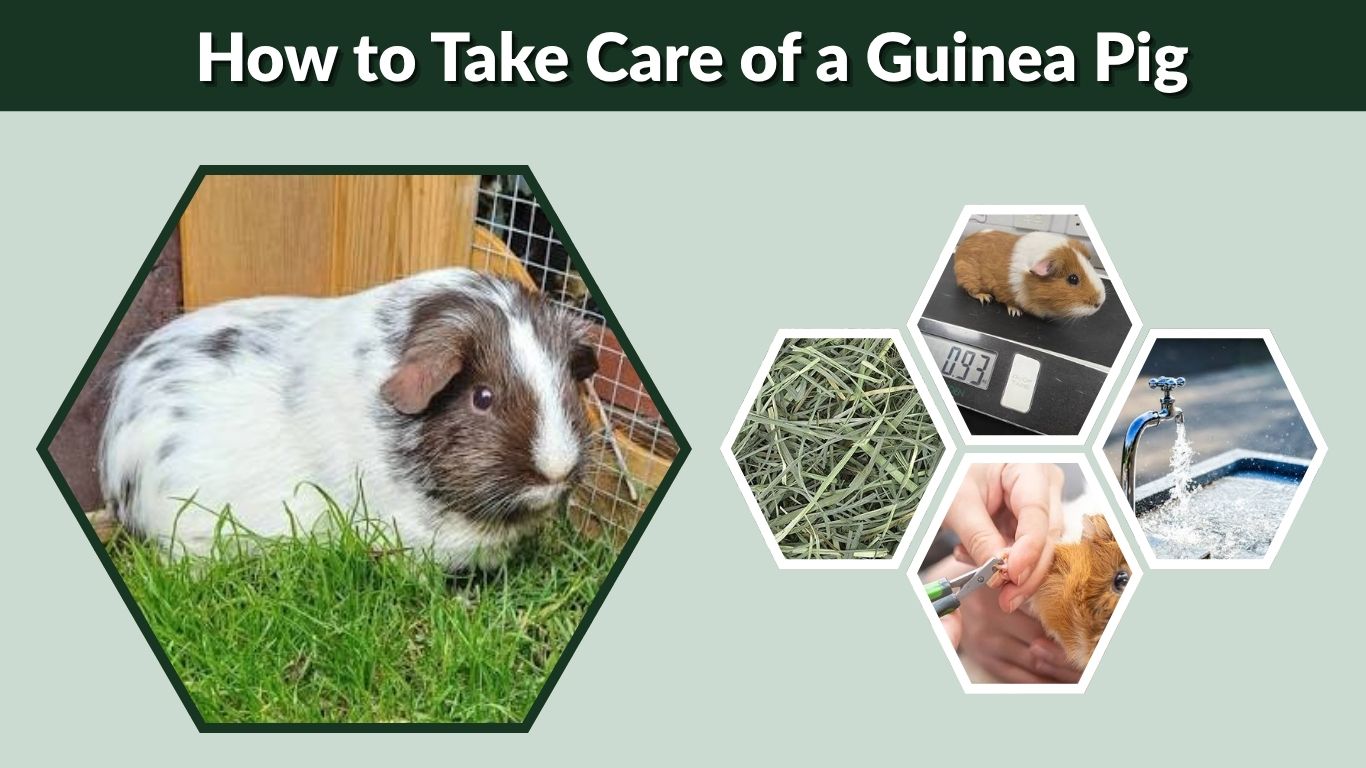
Guinea pigs are gentle, social pets, but they need more than a small cage and food bowl. Proper care includes unlimited hay, dietary vitamin C, generous floor space, companionship, enrichment and prompt veterinary attention. Because guinea pigs often hide illness, owners should learn each animal’s normal appetite, weight, droppings and behavior. This guide covers the essential housing, feeding, cleaning, handling and healthcare requirements for beginners.
Are Guinea Pigs Easy to Take Care Of?
Guinea pigs are manageable pets, but they are not maintenance-free. They require attention every day, regular enclosure cleaning and access to a veterinarian experienced with guinea pigs. They also commonly live for approximately five to seven years, making adoption a long-term responsibility.
Owners must be prepared to:
- Refill hay and check drinking water daily.
- Provide vegetables and measured pellets.
- Remove wet or dirty bedding.
- Monitor eating, droppings and behavior.
- Provide exercise and companionship.
- Budget for routine and emergency veterinary treatment.
Provide a Spacious, Safe Enclosure
A guinea pig enclosure should provide plenty of open floor space for running, exploring and moving away from companions. Place the habitat in a dry, well-ventilated location protected from direct sunlight, drafts, heaters, predators and excessive household noise. Larger habitats are generally better than small starter cages.
Bedding and Essential Equipment
Choose clean, absorbent and low-dust bedding. Suitable options can include paper-based bedding or a properly maintained fleece system. Every guinea pig needs access to shelters, tunnels, hay, fresh water and safe items to explore or chew.
Providing more hiding places than guinea pigs helps each animal retreat without being trapped or bullied. Remove wet bedding and uneaten fresh food daily, and clean the full enclosure regularly.
Temperature and Winter Care
Guinea pigs are sensitive to temperature extremes. A comfortable range is approximately 65–75°F or 18–24°C. Temperatures above roughly 85°F or 29°C can cause heatstroke. Keep their home away from direct sun and drafts, and take special care during hot, cold or humid weather.
Outdoor housing must be weatherproof, predator-proof and protected from dampness and wind. During cold weather, owners may need to move guinea pigs indoors or into a warm, secure shed or car-free garage while still providing a large exercise area.
Feed a High-Fiber Guinea Pig Diet
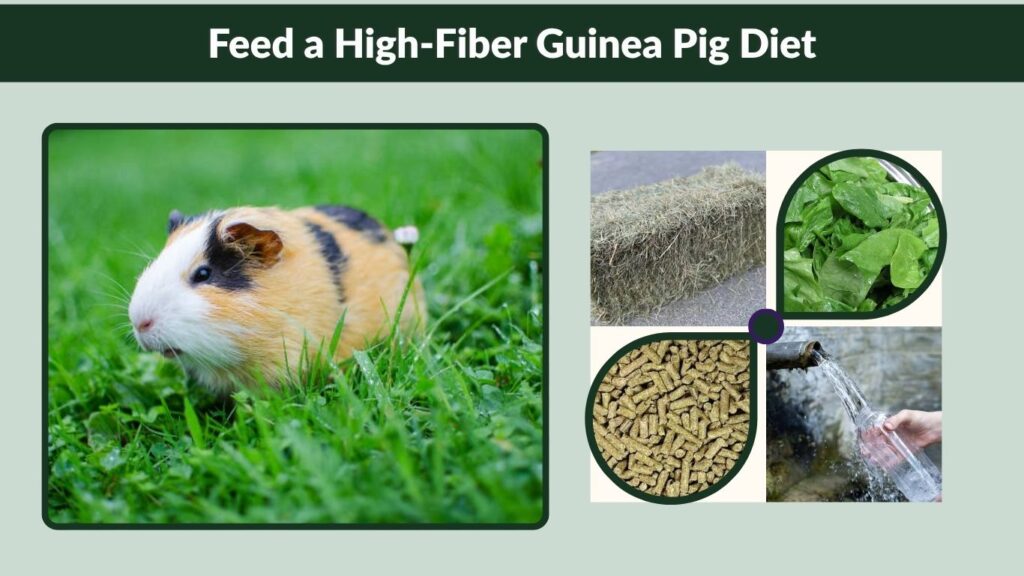
Good-quality grass hay should form most of a guinea pig’s diet and remain available at all times. Guinea pigs also require fresh vegetables, suitable pellets and dietary vitamin C because their bodies cannot manufacture this essential vitamin. Hay supports digestion and helps wear down continuously growing teeth.
| Food | How to provide it |
| Grass hay | Unlimited and continuously available |
| Guinea pig pellets | Small measured daily portion |
| Leafy vegetables | Fresh daily selection |
| Fruit | Small occasional treat |
| Water | Fresh and checked every day |
Hay, Pellets and Vegetables
Timothy, orchard or another good-quality grass hay is suitable for most healthy adults. Choose plain, high-fiber pellets formulated specifically for guinea pigs instead of mixes containing seeds, nuts or colorful pieces.
Fresh leafy greens and vitamin-C-rich vegetables, such as bell pepper, can be offered daily. Introduce unfamiliar foods gradually to reduce digestive upset. Young, pregnant, nursing or underweight guinea pigs may require adjusted feeding, so ask a veterinarian for guidance.
Foods to Avoid
Do not give guinea pigs garlic, avocado, potato, iceberg lettuce or other foods identified as harmful. Nuts, seeds and dry cereals are also unsuitable because they are generally too high in fat or carbohydrates.
Never provide lawn-mower clippings. They can upset a guinea pig’s digestive system and make the animal ill. Fruit should remain an occasional treat because of its sugar content.
Keep Guinea Pigs With Compatible Companions
Guinea pigs are naturally social and should normally live with at least one compatible guinea pig unless a veterinarian or qualified behavior professional advises otherwise. Suitable arrangements include bonded same-sex pairs or a neutered male living with one or more females.
Do not house guinea pigs with rabbits. Their diets, communication and behavior differ, and a larger rabbit can accidentally or intentionally injure a guinea pig. Each species should have a companion of its own kind.
Follow a Daily and Weekly Care Routine
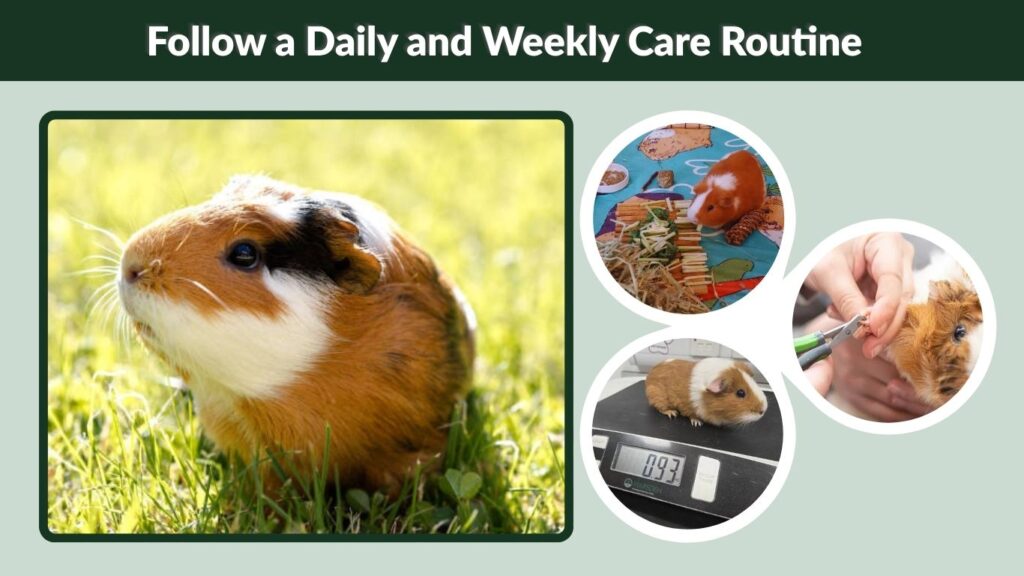
Observe every guinea pig individually each day. Confirm that each animal is eating, drinking, moving normally and producing its usual droppings. Regular monitoring is important because reduced appetite or altered toilet habits may be an early indication of illness.
| Frequency | Essential care tasks |
| Daily | Refill hay, check food and water, remove wet bedding and observe health |
| Weekly | Record weight, inspect skin and feet, and clean the enclosure thoroughly |
| As needed | Trim nails, brush the coat and replace worn equipment |
| Annually | Arrange a veterinary wellness examination |
Weigh each guinea pig weekly using a digital kitchen scale and keep a written record. Long-haired guinea pigs also need regular brushing to prevent tangles and mats, especially around the rear.
Handle Guinea Pigs Carefully
Approach a guinea pig slowly from the front rather than suddenly reaching from above. When lifting, support the hindquarters with one hand and the chest or shoulders with the other. Hold the guinea pig securely against your body without squeezing it.
Children should sit on the floor while handling guinea pigs and remain under adult supervision. Provide daily opportunities to explore a secure area containing tunnels, cardboard boxes, hay piles and hiding places. Always remove electrical cables, toxic plants and access to other pets.
Veterinary Care for Guinea Pigs
Choose a veterinarian experienced with guinea pigs before an emergency occurs. Guinea pigs generally do not need routine vaccinations, but they should receive a veterinary examination at least once a year.
Seek prompt veterinary care when a guinea pig:
- Stops eating or produces fewer droppings
- Loses weight
- Develops diarrhea or a swollen abdomen
- Breathes noisily or with difficulty
- Drools or struggles to chew
- Becomes unusually quiet or sits hunched
- Develops discharge, wounds, sores or hair loss
Guinea pigs can decline rapidly after developing symptoms, so early treatment is important. Appetite loss should never be ignored or left for several days without professional advice.
What Is Critical Care for Guinea Pigs?
Critical Care is a high-fiber recovery formula designed to support herbivores such as guinea pigs that are unable or unwilling to consume enough normal food. It can be mixed with water and offered from a bowl, spoon or feeding syringe, depending on the animal’s condition and veterinary instructions.
Recovery feeding should be used under veterinary guidance. A veterinarian must determine why the guinea pig is not eating, whether assisted feeding is safe and how much food should be given. Nutritional support does not treat the underlying illness, and improper force-feeding may create additional risks.
Caring for Newborn Guinea Pigs
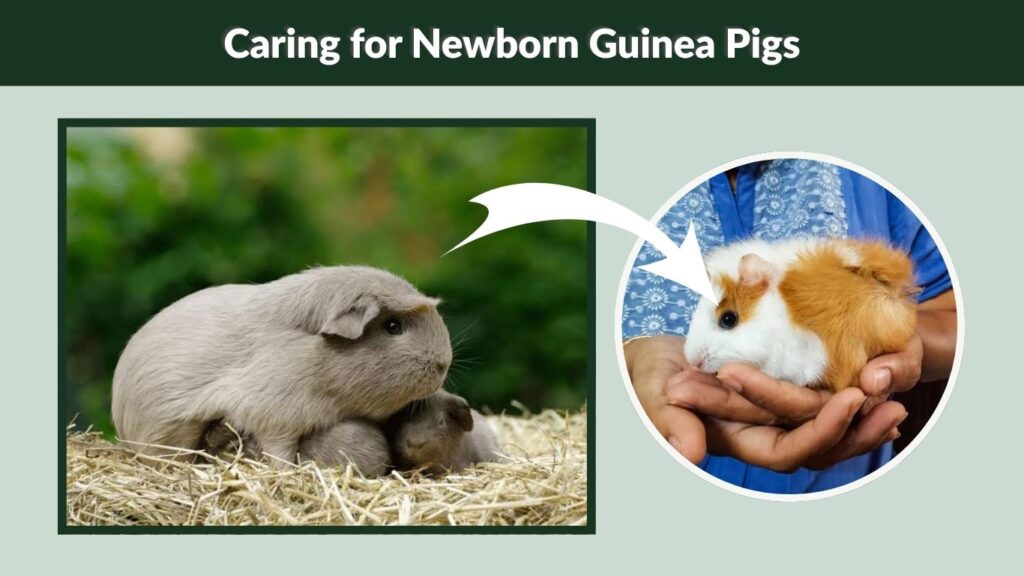
Newborn guinea pigs, called pups, are born with fur and open eyes. They can begin eating solid food soon after birth, although they continue nursing from their mother. Give the family easy access to hay, water and appropriate food while maintaining a quiet, clean environment.
Have the babies accurately sexed by an experienced veterinarian or guinea pig rescue. Seek veterinary help when a pup is cold, weak, losing weight or not nursing normally.
Traveling With Guinea Pigs by Car
Transport guinea pigs in a secure, well-ventilated carrier lined with absorbent bedding and hay. Familiar-smelling bedding or accessories and the presence of a bonded companion may help reduce stress. Keep the carrier stable and maintain a comfortable temperature.
Never leave guinea pigs inside a parked vehicle. During longer trips, carry familiar food, water, spare bedding and veterinary contact information. Guinea pigs are particularly vulnerable to extreme temperatures during transportation.
FAQs
How much daily care does a guinea pig need?
Guinea pigs need attention every day. Owners must replenish hay, check water, provide appropriate pellets and vegetables, remove wet bedding and observe eating and droppings. They also require companionship and enrichment. Weekly weighing and regular enclosure cleaning help reveal developing health or hygiene problems.
Do guinea pigs need veterinary care?
Yes. Guinea pigs need access to a veterinarian familiar with their species and should receive an annual wellness examination. Prompt treatment is necessary for appetite loss, breathing difficulty, diarrhea, wounds, dental symptoms or weight loss. Guinea pigs generally do not require routine vaccinations.
Are guinea pigs expensive to take care of?
Expenses include a spacious enclosure, shelters, carrier, bedding, hay, pellets, vegetables and veterinary treatment. Dental procedures and emergency care may be costly. Prospective owners should calculate regular food and bedding expenses and maintain savings or another financial plan for unexpected veterinary bills.
Can a guinea pig live alone?
Guinea pigs should normally live with at least one compatible guinea pig because human interaction does not completely replace same-species companionship. Temporary separation may be necessary after surgery, during illness or following serious conflict, but long-term solitary housing should be discussed with a professional.
How can I tell whether my guinea pig is healthy?
A healthy guinea pig remains alert, eats frequently, produces normal droppings and maintains a stable weight. Its eyes and nose should be clear, breathing should be quiet and movement should be comfortable. Appetite loss, weight change, diarrhea, drooling, discharge or unusual hiding requires veterinary attention.