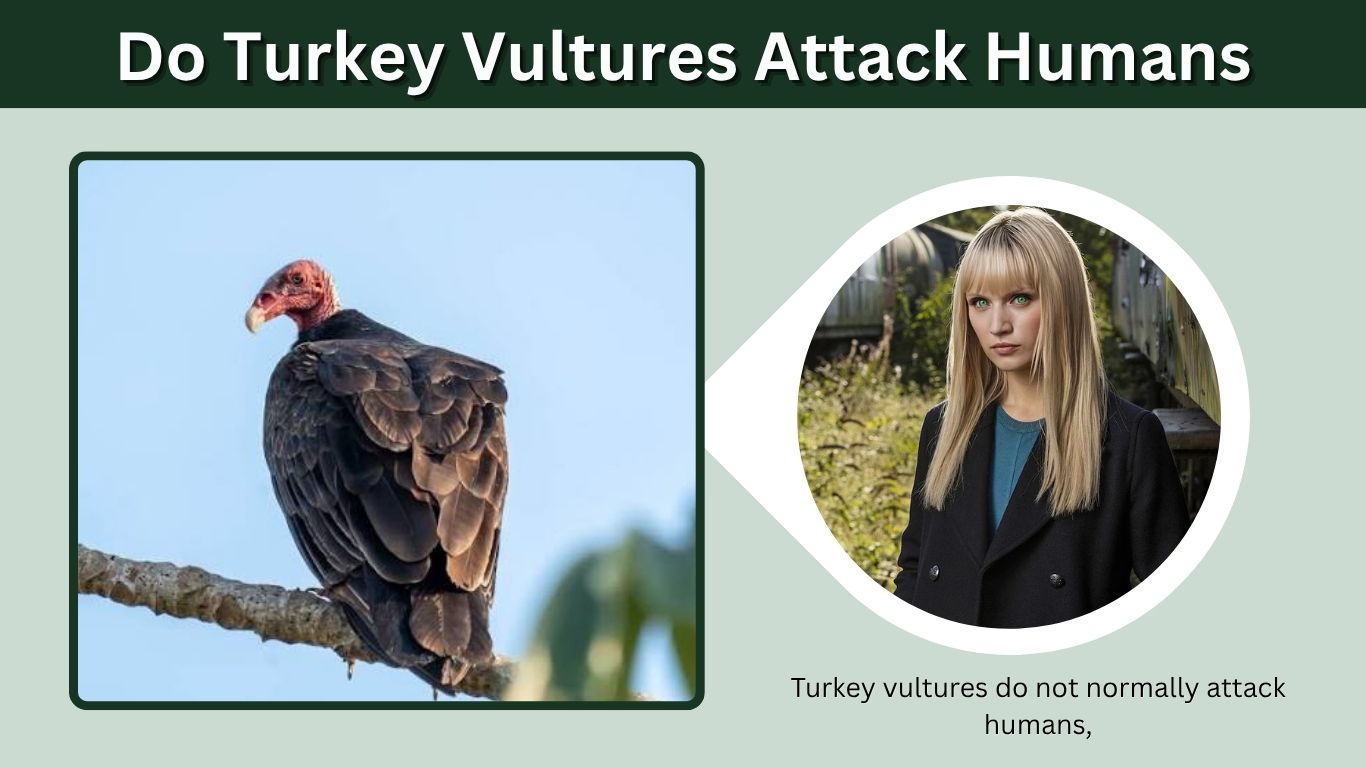
Turkey vultures do not normally attack humans, healthy pets, or livestock. These large birds are specialized scavengers that obtain nearly all their food from dead animals rather than hunting living prey. Their size, bald red heads, and circling flight can appear threatening, but a turkey vulture flying overhead is usually searching for carrion or using rising air currents—not preparing to attack. Conflicts are often wrongly blamed on turkey vultures when the birds involved are actually more aggressive black vultures.
Do Turkey Vultures Attack Humans?
Turkey vultures are not known for deliberately attacking people. Humans are not prey, and these birds generally try to escape when approached. Wildlife authorities describe vultures as carrion feeders with no biological reason to hunt a living person or pet.
A turkey vulture may circle above a person, runner, house, or field without showing any interest in attacking. Circling usually means the bird is riding a thermal—a column of warm rising air—to gain altitude efficiently.
How Turkey Vultures React to People
When frightened or cornered, a turkey vulture is more likely to:
- Move or fly away
- Hiss or grunt
- Spread its wings
- Regurgitate partially digested food
- Remain motionless or attempt to hide
Regurgitation is one of its main defensive behaviors. Adults protecting a nesting site may vomit toward an intruder, while threatened nestlings may hiss. Although unpleasant, these actions are designed to make a predator leave rather than begin an active attack.
Handling an injured or trapped vulture is still unsafe. Its hooked bill can cause an injury if the bird is forced to defend itself. Contact a licensed wildlife rehabilitator rather than attempting to capture one with bare hands.
Do Turkey Vultures Attack Live Animals?
Turkey vultures almost never attack living prey. Their feet and relatively weak grasping talons are better suited to standing and walking around carcasses than catching and carrying struggling animals. The species mainly eats mammals, birds, reptiles, amphibians, fish, and invertebrates that are already dead.
There are occasional reports of turkey vultures consuming insects, reptiles, nestling birds, or other very small and defenseless animals. These exceptional observations do not make them regular predators. Healthy adult animals are generally not at risk.
Turkey Vulture vs Black Vulture Attacks
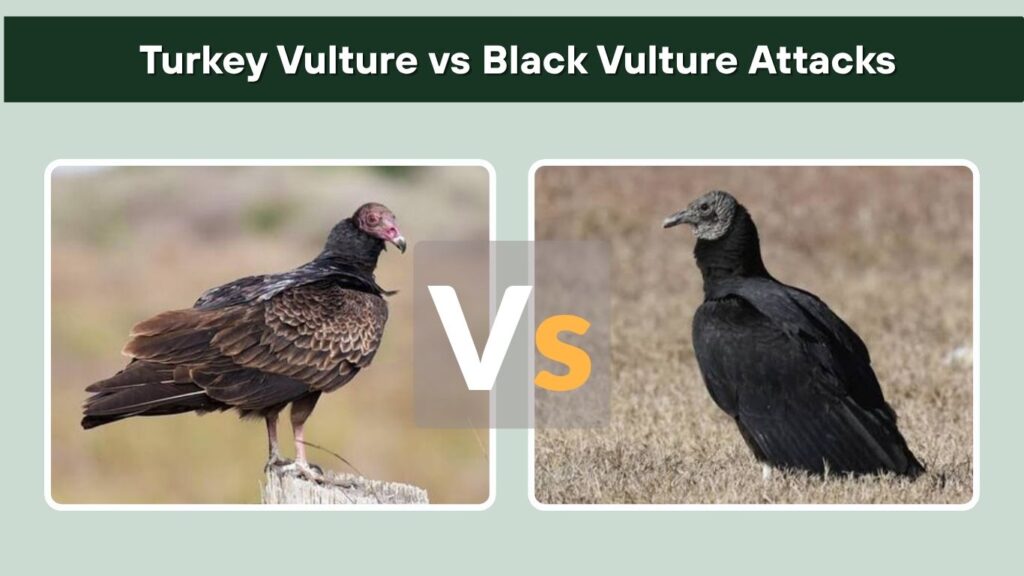
Many reports of “turkey vulture attacks” actually involve black vultures. Both species may gather at carcasses, farms, landfills, and communal roosts, but their behavior differs.
| Behavior | Turkey Vulture | Black Vulture |
| Primary feeding method | Scavenging | Scavenging |
| Attacks healthy animals | Extremely unusual | Possible |
| Newborn livestock risk | Very low | Documented risk |
| Temperament at food | Less aggressive | More aggressive |
| Head color as an adult | Red | Black |
| Tail in flight | Relatively long | Short and square |
| Pale wing markings | Along much of the trailing wing | Mainly at the wingtips |
USDA guidance specifically states that black vultures can attack calves, lambs, piglets, and other vulnerable animals. Turkey vultures may be present at the same location because they are attracted to afterbirth, stillborn animals, or carcasses, but that does not prove they caused an injury.
Will Turkey Vultures Attack Dogs?
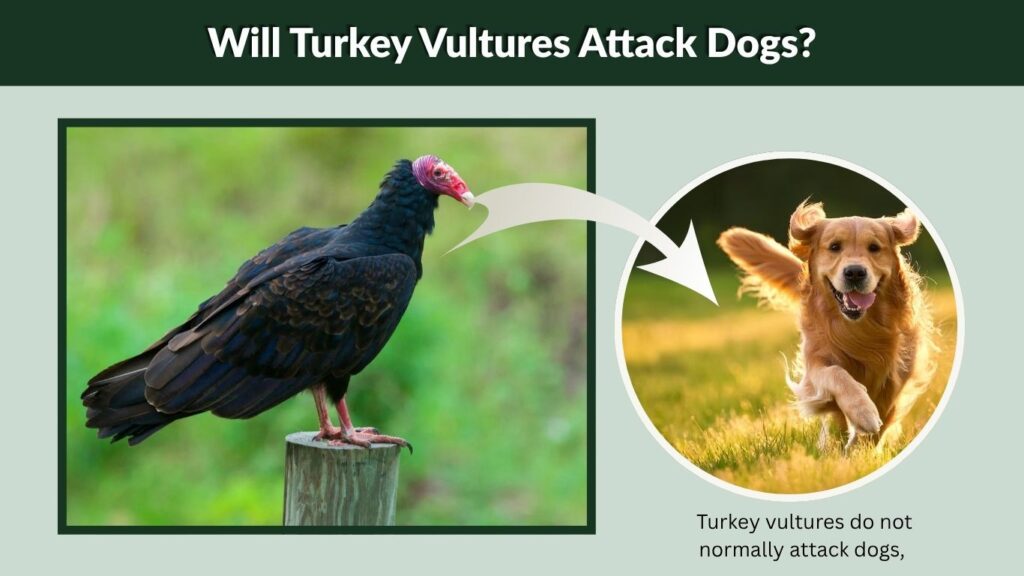
Turkey vultures do not normally attack dogs, including small dogs. A healthy dog moving around a yard does not resemble the carrion on which these vultures depend. State wildlife guidance specifically notes that turkey vultures do not prey upon healthy pets or livestock.
A vulture may gather near a property because it smells:
- A dead wild animal
- Roadkill nearby
- Uncovered garbage
- Meat scraps or grease
- Outdoor pet food
- Animal remains or afterbirth
The presence of vultures does not necessarily mean they are watching the dog. Removing the attractant will usually make the area less appealing.
What If a Dog Approaches a Vulture?
A grounded, sick, injured, or feeding vulture may defend itself when a dog comes too close. It may hiss, spread its wings, vomit, or strike defensively with its bill. Keep the dog leashed and allow the bird an open escape route.
Contact a veterinarian if physical contact results in an eye injury, deep wound, persistent vomiting, unusual weakness, or another concerning symptom.
Will Turkey Vultures Attack Cats?
Healthy adult cats are not normal turkey vulture prey. Outdoor cats may encounter vultures near roadkill or another carcass, but the vulture will normally retreat when approached.
Kittens, sick cats, and immobile animals should never be left outdoors without protection, although turkey vultures are far less likely to threaten them than dogs, coyotes, foxes, owls, or other active predators. The greater concern is conflict around a carcass where both animals may attempt to feed.
Will Turkey Vultures Attack Chickens?
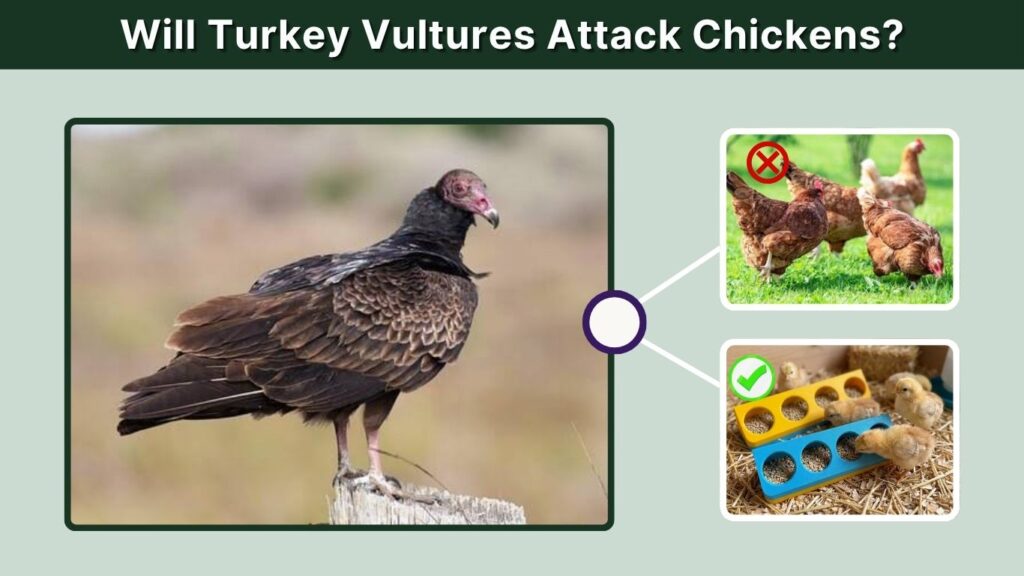
Turkey vultures do not ordinarily attack healthy adult chickens. They lack the strong grasping feet and hunting behavior of hawks and eagles. A vulture seen above a chicken yard may simply be soaring or investigating the scent of a dead animal.
However, owners should protect very young chicks, injured birds, and eggs. Turkey vultures have occasionally consumed nestlings and other defenseless live animals, although this behavior is rare. They are much more likely to feed on a chicken that has already died from disease, injury, heat, or another predator.
If a chicken is found dead, do not assume a turkey vulture killed it merely because one is feeding on the body. Examine the enclosure for tracks, missing feathers, damaged fencing, bite wounds, and other evidence of the original predator.
Protecting a Chicken Flock
Use a secure coop and covered run, especially for chicks. Remove dead poultry immediately, collect eggs regularly, store feed securely, and keep meat waste away from the enclosure. These steps discourage vultures while also reducing visits from raccoons, foxes, rodents, and other scavengers.
Do Turkey Vultures Attack Calves or Other Livestock?
Turkey vultures do not normally prey on healthy calves, lambs, goats, or piglets. They may gather around birthing areas because they can smell afterbirth, stillborn young, blood, or other organic material. This activity can make them appear responsible for an injury that occurred before they arrived.
Black vultures present a different concern. They have documented attacks on newborn and vulnerable livestock and may target soft tissues. Correct identification is therefore important before choosing a response.
Farmers should closely supervise outdoor births, house vulnerable newborns when possible, remove afterbirth and carcasses quickly, and contact USDA Wildlife Services or the relevant local authority when attacks are suspected.
Why Are Turkey Vultures Around My Home?
Turkey vultures may visit residential areas because they have found food, water, warm air currents, or suitable roosting structures. Large trees, towers, roofs, and utility structures can provide convenient overnight resting places.
Common attractants include uncovered trash, dead rodents, roadkill, compost containing meat, dirty grills, fish remains, outdoor feeding areas, and dead livestock. Removing these attractants is usually the most effective first step.
How to Keep Turkey Vultures Away Safely
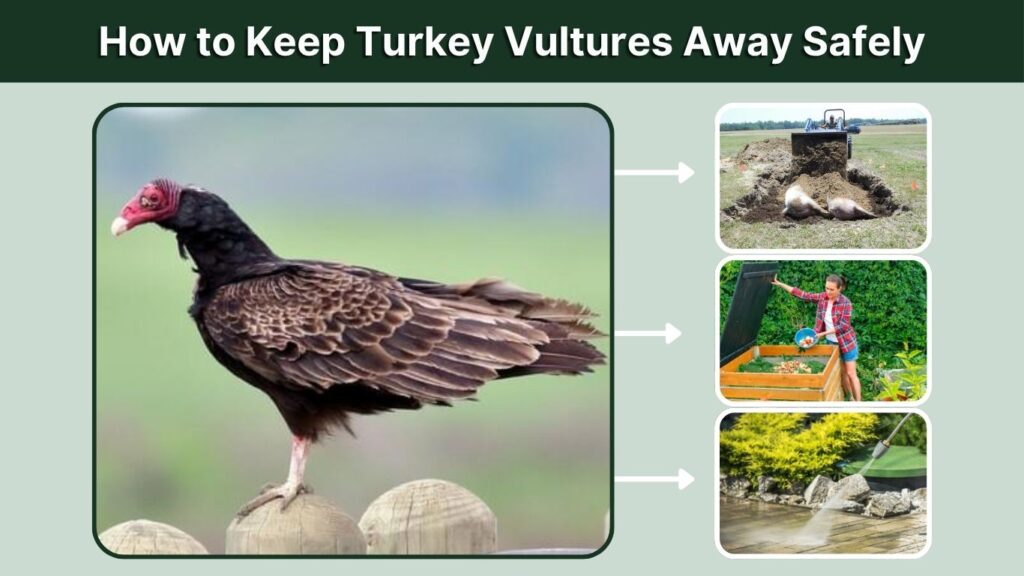
Turkey vultures are protected migratory birds in the United States, so harming, trapping, or killing them may require federal authorization. Begin with nonlethal prevention and seek professional guidance for a persistent roost or property-damage problem.
Helpful measures include:
- Remove carcasses and animal remains promptly
- Close garbage and compost containers securely
- Clean grease and food scraps from outdoor areas
- Feed pets indoors
- Block access to favored roof or ledge perches
- Use motion-activated sprinklers or approved visual deterrents
- Keep pets away from active roosts and nesting locations
Do not approach nests, throw objects at birds, or use poison. Improper control can injure protected wildlife and create risks for pets and other animals.
FAQs
Will a turkey vulture attack you while you are running?
No. A turkey vulture flying over or near a runner is generally riding air currents or traveling between locations. It does not view a moving person as prey and is unlikely to pursue or attack.
Can a turkey vulture carry away a small dog?
Turkey vultures are not built to seize and carry healthy dogs. Their feet are comparatively weak for grasping prey, and they primarily feed on animals that are already dead.
Why are turkey vultures circling my animals?
They may be using a thermal, traveling, or responding to the smell of carrion, afterbirth, waste, or a dead animal nearby. Circling alone does not indicate that they intend to attack living animals.
Are turkey vultures aggressive at their nests?
They may defend themselves or their chicks when someone enters a confined nesting location. Their usual defenses include hissing, retreating, playing dead, and regurgitating food rather than chasing people.
Should I kill a turkey vulture near my chickens?
No. First secure the flock and remove anything attracting scavengers. Turkey vultures are federally protected in the United States, and lethal control generally requires authorization. Contact an appropriate wildlife agency when a serious conflict continues.