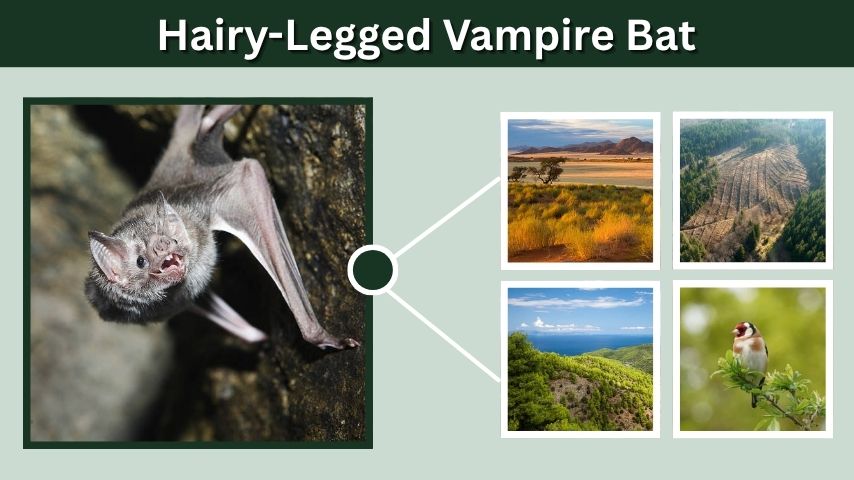
The hairy-legged vampire bat is one of the most unusual mammals in the Americas. Known scientifically as Diphylla ecaudata, this small bat belongs to the same blood-feeding group as the common vampire bat, yet it has a very different lifestyle. Instead of mainly feeding on livestock, it usually targets birds. Its quiet movements, specialized teeth, and secretive roosting habits make it a fascinating example of nocturnal adaptation.
What Is the Hairy-Legged Vampire Bat?
The hairy-legged vampire bat is one of only three living species of vampire bats. All three are native to the Americas, and all feed on blood, a diet known as hematophagy. However, the hairy-legged vampire bat stands apart because it is especially associated with avian blood. In simple terms, it is more of a bird-blood specialist than a mammal-blood feeder.
This bat is the only species in the genus Diphylla. Its scientific name, Diphylla ecaudata, reflects features that help distinguish it from other vampire bats. Although it shares the vampire bat reputation, it is not the monster of folklore. It is a small, shy, highly specialized animal that survives by finding food at night and avoiding danger during the day.
Like other bats, it plays a role in natural ecosystems. Its behavior may seem strange to humans, but it is part of a long evolutionary history in which different bat species adapted to insects, fruit, nectar, fish, frogs, and in this rare case, blood.
Appearance and Physical Features
The hairy-legged vampire bat is a compact bat with soft brown to reddish-brown or sooty-brown fur. Its body is small, but its features are highly specialized. It has a short face, large eyes, broad ears, and a pug-like snout. Compared with the common vampire bat, it is generally smaller and more delicate in appearance.
Its name comes from one of its most noticeable traits: hair on the legs and nearby wing membranes. The fur on the lower body and legs gives it a slightly fluffy look. This feature helps separate it from other vampire bats and explains the common name “hairy-legged.”
The bat has a reduced tail membrane and lacks a noticeable tail. Its lower lip is cleft, and its noseleaf is reduced compared with many other leaf-nosed bats. These physical details may look minor, but they are part of the bat’s feeding and movement strategy.
Key Physical Traits
- Small body size compared with many other bats
- Brown, reddish-brown, or sooty-brown fur
- Hairy legs and a narrow hairy membrane between the legs
- Large eyes and rounded ears
- Short face with a reduced noseleaf
- Sharp teeth adapted for making small feeding wounds
The bat’s teeth are especially important. Vampire bats do not suck blood like a straw in the dramatic way often imagined. Instead, they make a small cut and lap blood from the wound. Their front teeth are sharp enough to create a clean incision, while their saliva contains substances that help blood keep flowing while they feed.
Range and Habitat
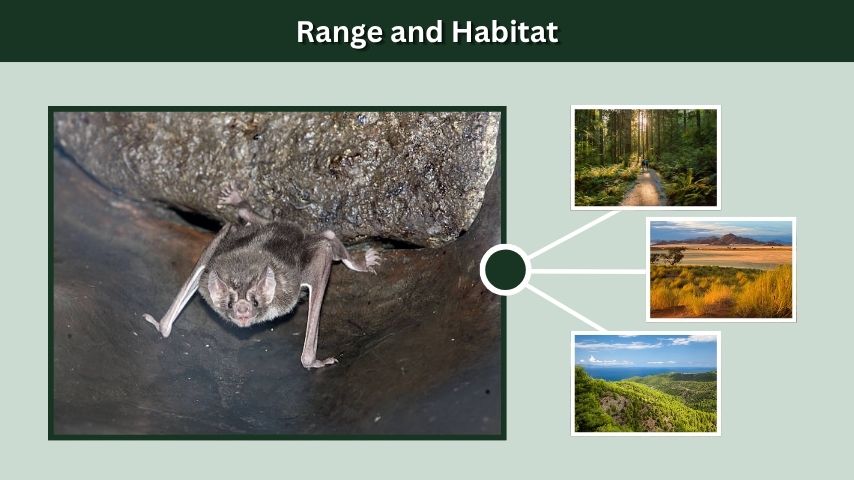
The hairy-legged vampire bat lives across parts of Central and South America, including regions from southern Mexico through Central America and into countries such as Colombia, Venezuela, Ecuador, Peru, Brazil, and nearby areas. It is mostly associated with tropical and subtropical environments.
Although it is often linked with forests, it is not limited to dense rainforest. It can occur in forested areas, savannas, scrublands, arid regions, and sometimes areas influenced by human activity. Its ability to use different roosting places helps it survive across a broad range.
During the day, the bat hides in quiet, dark places. Common roosts include caves, mine tunnels, hollow trees, and abandoned buildings. These shelters protect it from predators, heat, daylight, and disturbance. At night, it leaves the roost to search for feeding opportunities.
Diet and Feeding Behavior
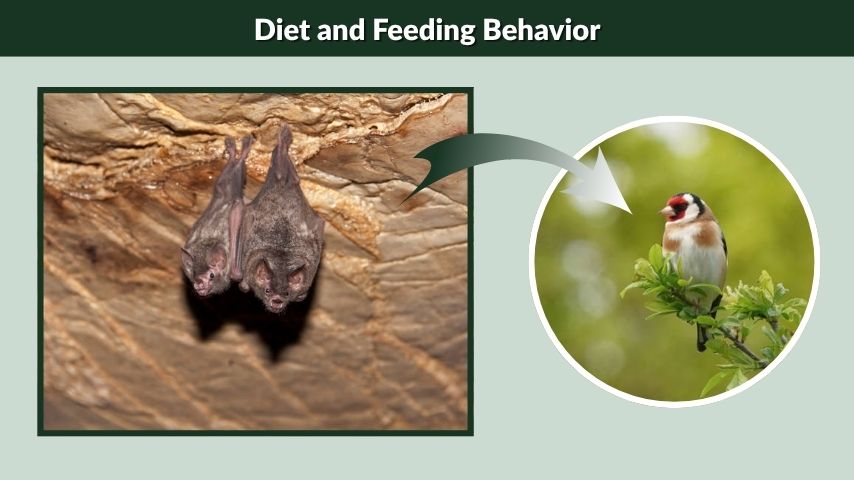
The most remarkable feature of the hairy-legged vampire bat is its diet. While the common vampire bat often feeds on mammals such as cattle, horses, or other livestock, the hairy-legged vampire bat mainly feeds on birds. Wild birds are its preferred food source, although it may also feed on domestic poultry when available.
The bat usually approaches quietly at night when birds are resting. It may target areas such as the legs or cloacal region, where it can make a small wound and feed with less effort. The feeding process is careful and often goes unnoticed by the host.
How It Feeds
The hairy-legged vampire bat does not kill its host during normal feeding. It uses sharp teeth to make a small cut, then laps blood from the wound. Its saliva helps keep the blood from clotting quickly, giving the bat enough time to feed.
Blood is a difficult diet. It is rich in protein and water but low in fat and carbohydrates. Because of this, vampire bats need special adaptations in digestion, kidney function, and metabolism. They also need to feed regularly because they cannot store much energy from blood.
This dependence makes vampire bats vulnerable to missed meals. A bat that cannot feed for more than a short period may become weak. This is one reason social behavior, including food sharing, has attracted scientific attention in vampire bats.
Social Life and Roosting
The hairy-legged vampire bat is generally secretive and nocturnal. It spends daylight hours hidden in roosts and becomes active after dark. Roosting groups may be small, and individuals may use caves, tunnels, tree hollows, or abandoned structures.
Vampire bats are known for complex social behavior. In some vampire bat species, individuals may share food by regurgitating blood to roost mates that failed to feed. This behavior is most famous in the common vampire bat, but food sharing has also been reported in hairy-legged vampire bats. Such behavior shows that these animals are not simply solitary night feeders; they can have social relationships that help individuals survive.
Why Food Sharing Matters
For an animal with such a specialized diet, missing a meal can be dangerous. Food sharing can help reduce the risk of starvation within a group. It may also strengthen social bonds, especially between individuals that roost together repeatedly.
This behavior challenges the negative image often attached to vampire bats. Rather than being mindless blood-drinkers, they are intelligent mammals with social strategies shaped by survival pressure.
Reproduction and Life Cycle
Like many bats, the hairy-legged vampire bat has a slow reproductive rate compared with small rodents. Females usually invest heavily in a small number of offspring. A baby bat, called a pup, depends on its mother for warmth, protection, and milk before it can fly and feed independently.
Because vampire bats require a steady food supply, reproduction is closely linked to environmental conditions. Safe roosting sites and available hosts are important for successful breeding. Disturbance to roosts can affect adults and young, especially if colonies are forced to move.
Young bats must learn how to navigate, locate hosts, approach them safely, and feed without attracting too much attention. These skills are essential for survival and likely develop through a mix of instinct, practice, and social learning.
Hairy-Legged Vampire Bat vs Common Vampire Bat
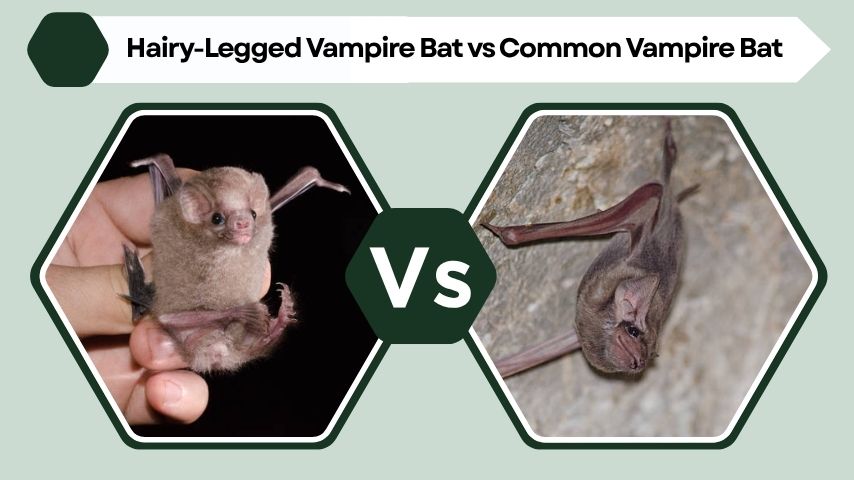
Although both species are vampire bats, they differ in several important ways. The common vampire bat is more strongly associated with mammal blood and is often involved in conflict with livestock farming. The hairy-legged vampire bat, by contrast, is more closely linked to birds.
| Feature | Hairy-Legged Vampire Bat | Common Vampire Bat |
|---|---|---|
| Scientific name | Diphylla ecaudata | Desmodus rotundus |
| Main food source | Bird blood | Mammal blood |
| Body appearance | Smaller, hairy legs, broad ears | More robust, strong ground movement |
| Typical hosts | Wild birds and poultry | Livestock and other mammals |
| Human conflict level | Usually lower | Often higher due to livestock feeding |
This comparison is important because not all vampire bats behave the same way. Public fear often focuses on vampire bats as a single group, but each species has its own ecological role, feeding preference, and relationship with humans.
Relationship With Humans
The hairy-legged vampire bat rarely receives as much attention as the common vampire bat. However, it may come into contact with people when it feeds on domestic birds or roosts near human structures. In some areas, changes in land use and reductions in wild bird populations may push the bat toward poultry or, rarely, other hosts.
There have been reports of this species feeding on human blood, but such cases are unusual and often linked to environmental disturbance or limited natural food sources. The species is not generally considered a major threat to humans, but any blood-feeding animal can raise health concerns.
Health Concerns
The main public health concern connected with vampire bats is disease transmission, especially rabies. However, risk varies by region, species, contact level, and local disease conditions. People should avoid handling bats, whether they are vampire bats or not. If a bat is found inside a home, near sleeping people, or behaving abnormally, local wildlife or public health authorities should be contacted.
Farmers can reduce conflict by protecting poultry at night, improving animal enclosures, and avoiding unnecessary destruction of bat roosts. Killing bats indiscriminately can harm ecosystems and may not solve the problem if the real cause is poor livestock or poultry protection.
Conservation Status
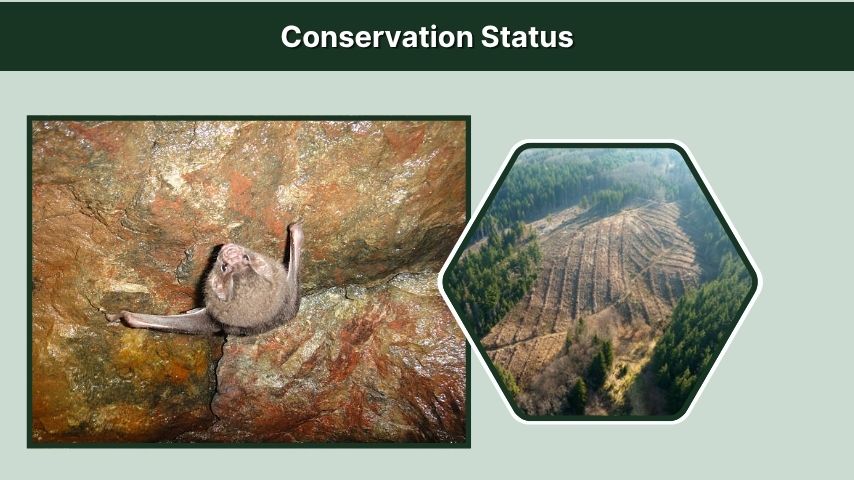
The hairy-legged vampire bat is currently considered a species of Least Concern, meaning it is not regarded as globally threatened at this time. Its wide distribution helps protect it from immediate extinction risk. However, local populations may still be affected by habitat loss, roost disturbance, persecution, and changes in prey availability.
Conservation should focus on balanced management. Bats are often misunderstood, and fear can lead to unnecessary killing. Protecting roosts, maintaining healthy forests, and educating communities about bat ecology can help reduce conflict.
Even species that are not endangered deserve attention. The hairy-legged vampire bat is part of a highly specialized ecological group, and its survival depends on stable habitats and suitable host populations.
Ecological Importance
At first glance, a blood-feeding bat may seem harmful or unnecessary. Yet every species fits into a larger ecological network. The hairy-legged vampire bat evolved to use a food source that very few mammals can survive on. Its existence shows how flexible and diverse bat evolution has been.
Bats as a whole are important for insect control, pollination, seed dispersal, and ecosystem balance. Vampire bats represent only a tiny fraction of bat diversity. Understanding them helps scientists learn about metabolism, disease ecology, social behavior, and evolution.
The hairy-legged vampire bat also reminds us that nature is not always comfortable or familiar. Some animals survive in ways that seem strange, but those strategies are often the result of millions of years of adaptation.
Interesting Facts About the Hairy-Legged Vampire Bat
- It is one of only three living vampire bat species.
- It mainly feeds on bird blood rather than mammal blood.
- It is the only species in the genus Diphylla.
- Its legs and nearby membranes are noticeably hairy.
- It roosts in caves, hollow trees, mines, and abandoned buildings.
- It has been observed sharing food, a rare and complex social behavior.
- Despite its eerie name, it is a small and shy nocturnal mammal.
FAQs
Is the hairy-legged vampire bat dangerous?
The hairy-legged vampire bat is not usually dangerous to people. It is shy, nocturnal, and mainly feeds on birds. However, people should never handle bats because they can carry diseases such as rabies. If a bat is found indoors or acting strangely, contact local wildlife or health officials.
Does the hairy-legged vampire bat drink human blood?
It mainly feeds on wild birds and sometimes domestic birds. Human blood has been reported in rare cases, usually where natural food sources are disturbed or limited. These cases are not typical of the species’ normal feeding behavior.
Where does the hairy-legged vampire bat live?
This bat lives in parts of Central and South America, including tropical and subtropical regions from southern Mexico through Central America and into South America. It can use forests, scrublands, savannas, caves, hollow trees, mines, and abandoned buildings.
Why is it called the hairy-legged vampire bat?
It gets its name from the noticeable hair on its legs and nearby wing membrane. The “vampire” part of the name refers to its blood-feeding diet. Unlike fictional vampires, it is a small mammal with specialized feeding adaptations.
What does the hairy-legged vampire bat eat?
Its preferred food is bird blood. It usually feeds at night while birds are resting. It may also feed on domestic poultry when wild birds are less available. Like other vampire bats, it makes a small wound and laps blood rather than sucking it.