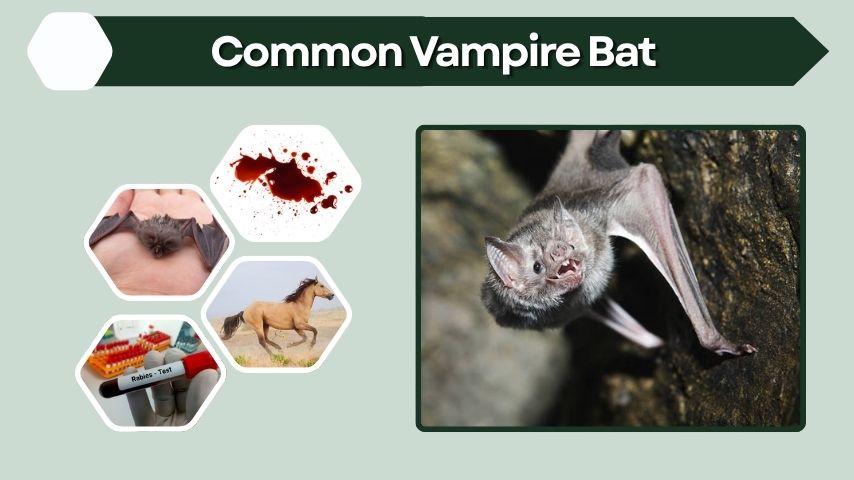
The common vampire bat is one of the most unusual mammals in the world. Known for feeding on blood, this small bat has inspired myths, fear, and fascination for centuries. Yet behind its frightening reputation is a highly social, intelligent, and specialized animal. Understanding the common vampire bat helps separate fact from fiction and reveals its important role in nature.
What Is the Common Vampire Bat?
The common vampire bat, scientifically known as Desmodus rotundus, is a small bat species native to parts of Central and South America. It is one of only three known vampire bat species, and it is the most widespread and well-studied of them.
Unlike most bats, which feed on insects, fruit, nectar, or fish, the common vampire bat survives almost entirely on blood. This feeding habit is called hematophagy. Although the idea may sound alarming, the bat usually takes only a small amount of blood from its host.
Basic Identification
The common vampire bat has a compact body, short muzzle, and strong legs. It is usually brownish-gray, with a lighter underside. Its face looks different from many other bats because it lacks a nose leaf and has a short, flattened snout.
| Feature | Description |
|---|---|
| Scientific name | Desmodus rotundus |
| Average body length | About 7 to 9 cm |
| Wingspan | About 18 cm |
| Diet | Blood from mammals and birds |
| Habitat | Caves, hollow trees, mines, and buildings |
| Range | Central and South America |
| Activity | Nocturnal |
Where It Lives
Common vampire bats are found from Mexico through Central America and into much of South America. They prefer warm regions and usually live in places that offer shelter during the day.
They commonly roost in:
- Caves and rock crevices
- Hollow trees
- Abandoned mines
- Old buildings and wells
These roosting sites protect them from sunlight, predators, and extreme weather.
Physical Adaptations for Feeding on Blood
The common vampire bat has many special body features that help it find, approach, and feed on warm-blooded animals. These adaptations make it one of the most specialized mammals on Earth.
Sharp Teeth and Gentle Feeding
The bat has razor-sharp front teeth that can make a small cut in the skin of an animal. Unlike a predator that tears flesh, the common vampire bat makes a shallow wound and laps up the blood with its tongue.
Its saliva contains special compounds that help keep the blood flowing. These compounds prevent the blood from clotting quickly, allowing the bat to feed for several minutes.
Heat-Sensing Ability
One of the most remarkable features of the common vampire bat is its ability to detect heat. It has specialized sensors around its nose that help it locate areas where blood flows close to the skin.
This ability is useful because the bat often feeds at night when visibility is poor. By sensing warmer patches on a sleeping animal, it can choose a feeding spot more efficiently.
Strong Legs and Ground Movement
Most bats are awkward on the ground, but common vampire bats are surprisingly good at moving across surfaces. They can walk, hop, and even make quick jumps using their wings and strong limbs.
This skill helps them approach sleeping livestock or wild animals quietly from the ground rather than landing directly on them.
Diet and Feeding Behavior
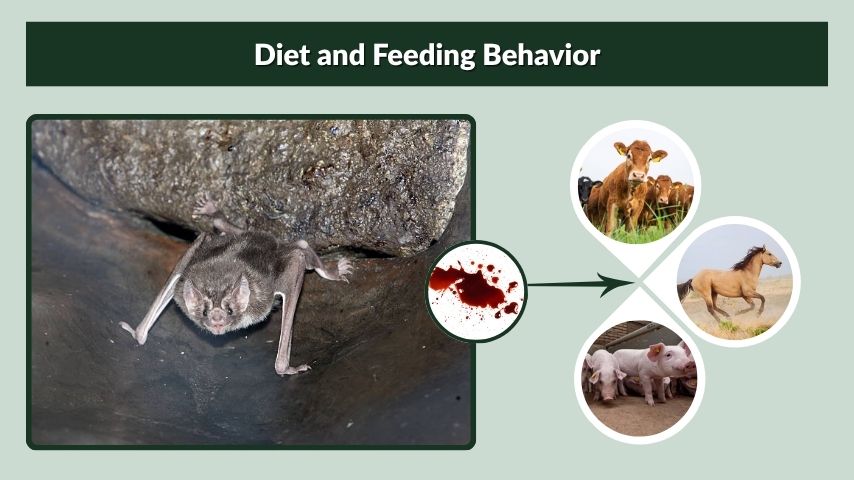
The common vampire bat feeds mainly on the blood of mammals, though it may also feed on birds. In areas where livestock are common, cattle, horses, pigs, and goats are frequent hosts.
How It Finds Food
At night, the bat leaves its roost and searches for a suitable host. It uses smell, sound, vision, and heat detection to locate animals. Once it finds a host, it lands nearby and moves carefully toward it.
The bat usually chooses a sleeping or resting animal. It avoids causing panic because a startled host can easily injure or kill it.
How It Feeds
The feeding process is quiet and careful:
- The bat approaches the host slowly.
- It chooses a warm area of skin.
- It makes a small cut with its teeth.
- It laps up the blood rather than sucking it.
- It leaves after feeding enough to survive.
A single meal may take around 20 to 30 minutes. The amount of blood taken is usually small, but repeated feeding can cause stress or health problems for livestock.
Why Blood Is a Difficult Diet
Blood is rich in protein but low in fat and carbohydrates. It also contains a lot of water and can be difficult for the body to process. Because of this, the common vampire bat has special digestive and kidney adaptations.
After feeding, the bat quickly removes excess water from the blood through urination. This makes it lighter and helps it fly back to its roost.
Social Life and Cooperation
Despite its fearsome image, the common vampire bat is a highly social animal. It lives in colonies and shows behaviors that are rare among many mammals.
Colony Structure
Colonies may include a few individuals or many bats. Females often form stable social groups and maintain close relationships with one another. Males may compete for access to roosting areas and females.
Within a colony, bats recognize each other and may form long-term social bonds.
Food Sharing
One of the most fascinating behaviors of common vampire bats is food sharing. Because they depend on blood, they can starve quickly if they fail to feed. A bat that does not eat for a couple of nights may be in danger.
To help each other survive, bats sometimes regurgitate blood meals for hungry colony members. This behavior is not random. Bats are more likely to share food with relatives or individuals that have shared with them before.
This cooperation shows that vampire bats have complex social memory and relationships.
Grooming and Bonding
Grooming is another important social behavior. Bats groom each other to clean fur, remove parasites, and strengthen bonds. Grooming may also help build trust before food sharing occurs.
These social habits make the common vampire bat an important species for studying cooperation in animals.
Reproduction and Life Cycle
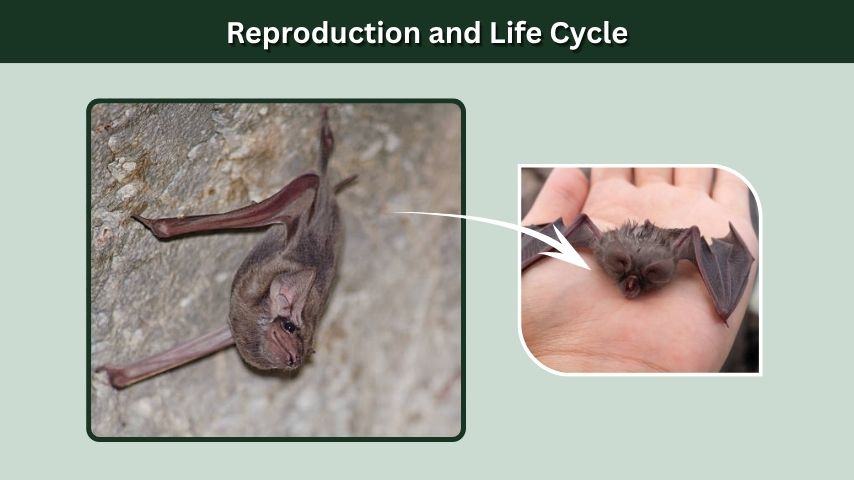
Common vampire bats reproduce slowly compared with many small mammals. This makes their survival dependent on stable colonies and successful care of young.
Mating and Birth
Females usually give birth to one pup at a time. The young bat is born helpless and depends entirely on its mother. The mother nurses the pup with milk before it gradually begins feeding on blood.
Births can occur at different times of the year depending on location and environmental conditions.
Care of the Young
Mother bats are attentive caregivers. They keep their pups warm, nurse them, and protect them in the roost. Young bats learn social behavior and feeding skills over time.
The bond between mother and pup is strong, and young bats may remain connected to their colony as they mature.
Lifespan
In the wild, common vampire bats may live for several years. In protected conditions, they can live longer. Their survival depends on food availability, disease pressure, predators, and human control efforts.
Common Vampire Bats and Disease
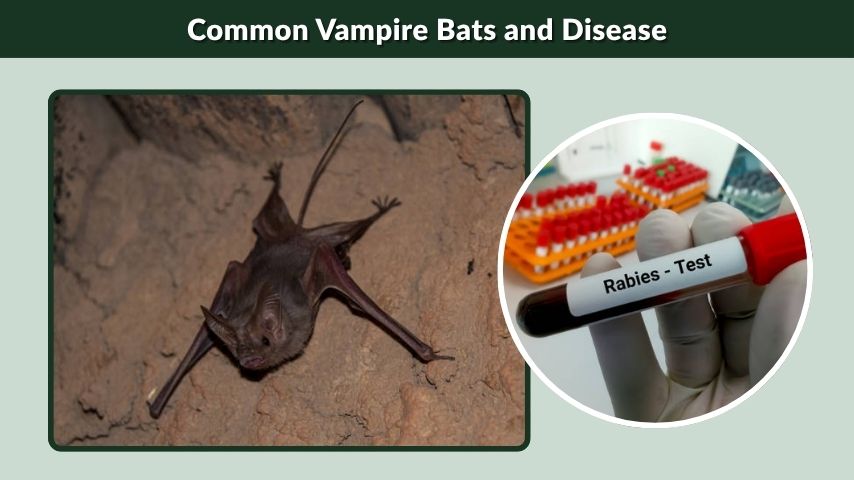
The common vampire bat is often discussed because it can transmit rabies. This is one reason it has a complicated relationship with humans, especially in livestock-producing regions.
Rabies Risk
Rabies is a viral disease that affects the nervous system of mammals. If a vampire bat carrying rabies bites livestock, pets, or people, the virus can potentially spread.
Human cases are uncommon but serious. Livestock losses can also be significant in areas where infected bats are present.
Impact on Livestock
Repeated feeding by vampire bats can affect livestock health. The wounds themselves are usually small, but they may become infected or attract insects. Blood loss can also be a problem when animals are bitten repeatedly.
Farmers may notice:
- Small bleeding wounds
- Irritated or restless animals
- Reduced livestock condition
- Risk of disease transmission
Because of these concerns, vampire bats are monitored and managed in some regions.
Prevention and Management
Managing vampire bat problems usually involves reducing disease risk rather than eliminating all bats. Livestock vaccination, improved animal housing, and responsible monitoring can help reduce conflicts.
Broad killing of bats can harm ecosystems and may not solve the problem effectively. Targeted, science-based management is usually a better approach.
Myths and Misunderstandings
The common vampire bat has inspired many myths, especially because of its blood-feeding diet. However, much of its reputation is exaggerated.
Do Vampire Bats Attack Humans?
Common vampire bats can bite humans, but they generally prefer livestock or other animals when available. Human bites are more likely in areas where people sleep in open structures and livestock are nearby.
They do not attack in the dramatic way often shown in movies. Their feeding is quiet, small-scale, and designed to avoid waking the host.
Do They Suck Blood?
The phrase “suck blood” is misleading. Vampire bats do not suck blood like a straw. They make a tiny cut and lap up the blood with their tongue.
This difference matters because it shows how specialized and delicate their feeding method actually is.
Are They Evil or Useless?
No animal is evil. The common vampire bat is simply adapted to a rare diet. It plays a role in its ecosystem and provides scientists with valuable insights into evolution, disease, social cooperation, and medicine.
Compounds from vampire bat saliva have even inspired medical research into blood flow and clot prevention.
Ecological Importance
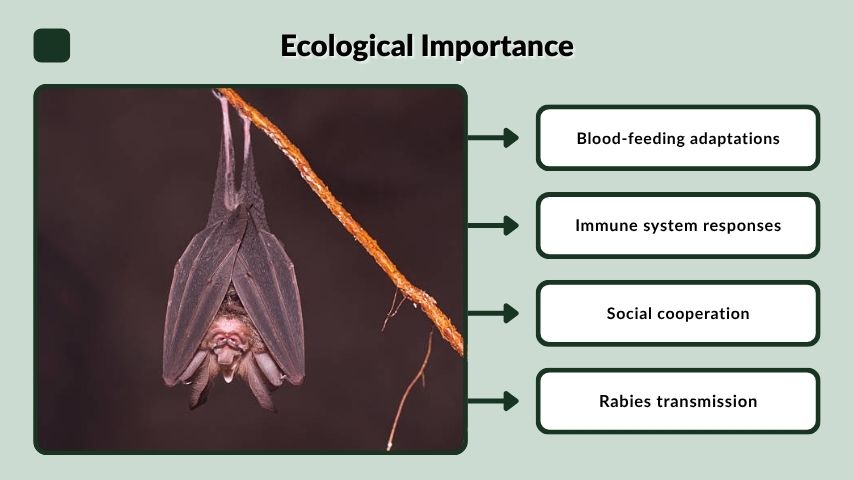
Although vampire bats can create problems for humans and livestock, they are still part of natural ecosystems. Like all species, they interact with other animals, habitats, and disease systems.
Role in Nature
The common vampire bat is both a predator and prey species. It feeds on blood, but it may also be hunted by owls, snakes, and other predators. Its roosts can support complex communities of organisms, including insects and microorganisms.
Its presence also reflects broader ecological conditions, such as habitat availability and host populations.
Scientific Value
The common vampire bat is valuable to science because of its unique biology. Researchers study it to understand:
- Blood-feeding adaptations
- Immune system responses
- Social cooperation
- Rabies transmission
- Evolution of mammal behavior
Few mammals show such a combination of specialized feeding and advanced social behavior.
Human Conflict and Conservation
The common vampire bat is not considered rare across much of its range, but it faces conflict with humans because of livestock damage and disease concerns.
Why Conflict Happens
Conflict usually occurs where vampire bats feed on domestic animals. As livestock farming expands, bats may find more feeding opportunities. This can increase contact between bats, animals, and people.
In some areas, fear and misunderstanding lead to unnecessary killing of bats, including harmless bat species that do not feed on blood.
Protecting People and Bats
A balanced approach is important. People need protection from rabies and livestock losses, but bat control should be careful and informed.
Useful steps include:
- Vaccinating livestock in risk areas
- Improving sleeping and housing structures
- Monitoring bat bites and disease outbreaks
- Avoiding harm to non-vampire bat species
Many bats are beneficial because they pollinate plants, spread seeds, and control insects. Misidentifying bats can damage these helpful populations.
Interesting Facts About the Common Vampire Bat
The common vampire bat is full of surprising traits that make it different from most mammals.
Quick Facts
- It is one of only three living vampire bat species.
- It feeds mostly on blood from mammals.
- It can walk and hop better than most bats.
- It uses heat sensors to find blood-rich areas.
- It shares food with hungry colony members.
- It has saliva that helps prevent blood clotting.
- It usually feeds at night while hosts are sleeping.
Why It Matters
The common vampire bat matters because it challenges simple ideas about animals. It may seem frightening at first, but it is also social, intelligent, and biologically remarkable.
Studying this bat helps scientists understand how animals adapt to extreme diets and how cooperation can evolve in nature.
FAQs
What does the common vampire bat eat?
The common vampire bat feeds mainly on blood from mammals, especially livestock such as cattle, horses, pigs, and goats. It may also feed on birds. It does not eat insects or fruit like many other bats. Its body is specially adapted to survive on this unusual liquid diet.
Does the common vampire bat really suck blood?
No, the common vampire bat does not suck blood in the way many people imagine. It makes a small cut with its sharp teeth and laps up the blood using its tongue. Its saliva helps keep the blood flowing while it feeds.
Are common vampire bats dangerous to humans?
They can be dangerous if they carry rabies, but they do not usually seek out humans as preferred hosts. The greater concern is in rural areas where people, livestock, and bats live close together. Preventing bites and vaccinating animals can reduce the risk.
Where do common vampire bats live?
Common vampire bats live in warm parts of Mexico, Central America, and South America. They usually roost in caves, hollow trees, abandoned mines, wells, and old buildings. These dark shelters protect them during the day before they become active at night.
Why are common vampire bats important?
Common vampire bats are important because they help scientists understand rare feeding adaptations, disease transmission, and social cooperation. Their behavior, especially food sharing, shows a complex social life. Although they can cause problems for livestock, they are still a valuable part of biodiversity.