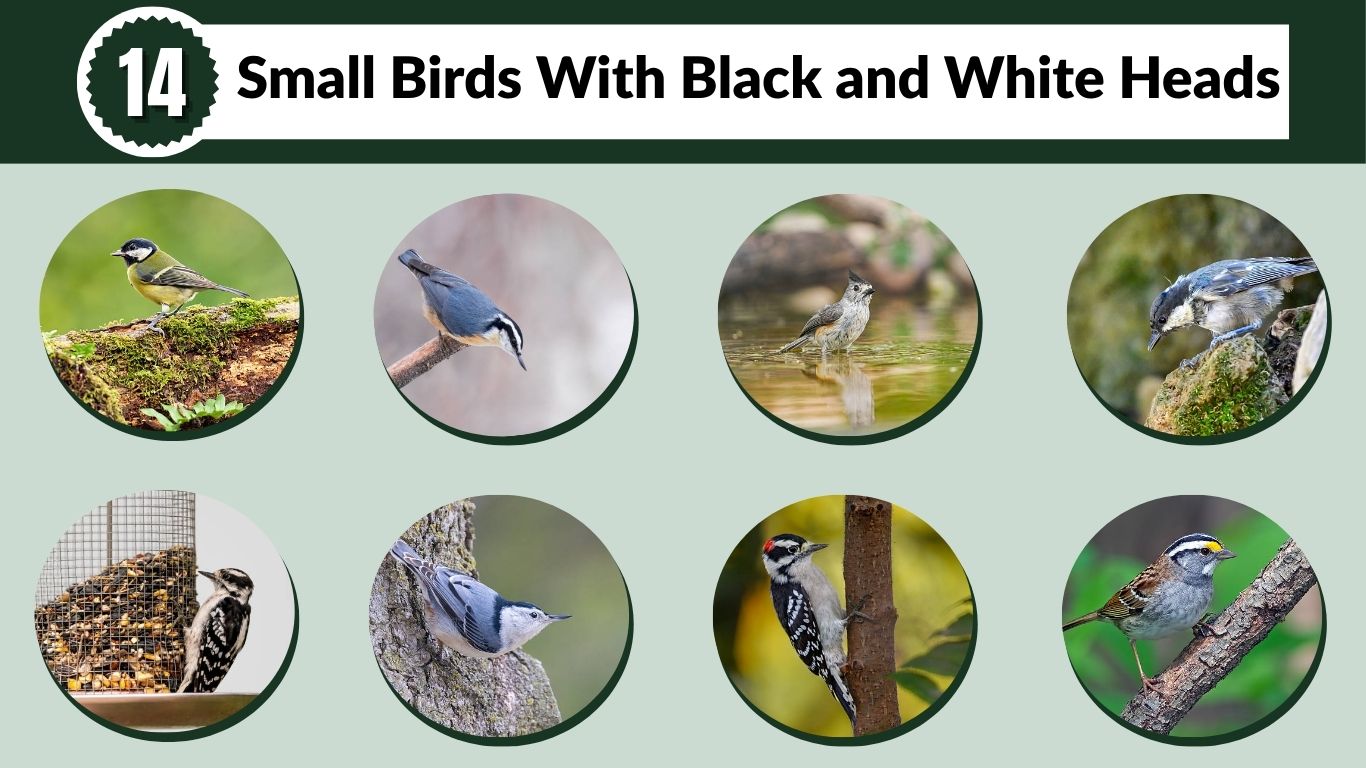
Small birds with black and white heads can be tricky to identify because many species share similar colors, stripes, caps, or cheek patches. Some have black caps with white faces, while others show bold black and white striped heads, red spots, gray bodies, or white throats. This guide covers 14 small birds that match these common search descriptions and helps you recognize them by appearance, habitat, diet, and behavior.
1. Black-capped Chickadee
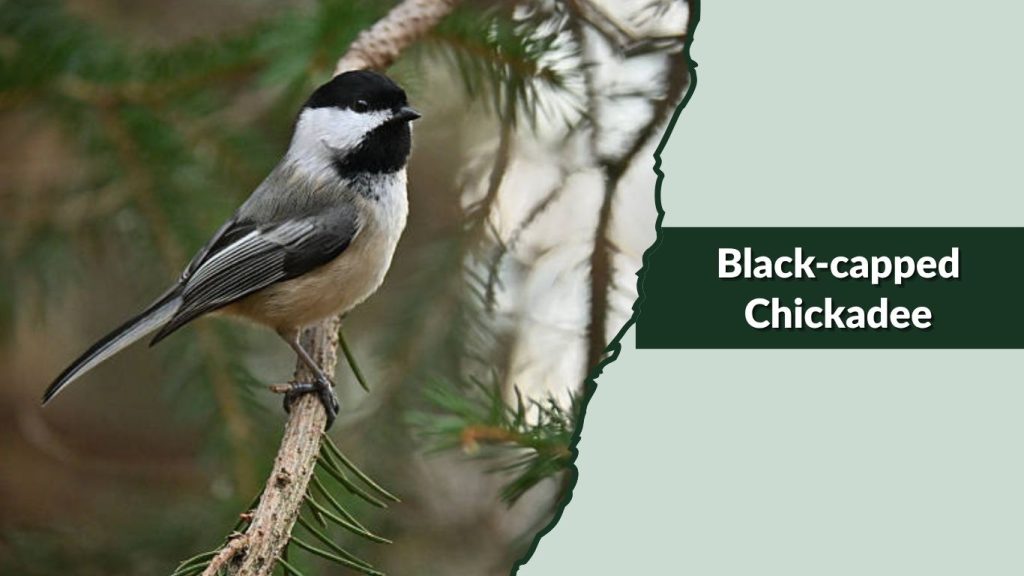
The Black-capped Chickadee is a small bird with a black and white head that is commonly found in backyards, parks, and woodland habitats. Its distinctive black cap and bright white cheeks make it one of the most recognizable small birds in North America. Active and curious, it often visits feeders and can be seen moving quickly among branches in search of food.
Identification
- Small bird with a black cap and white cheeks
- Black bib beneath the throat
- Soft gray back and wings
- Pale white belly and buff-colored sides
- Short, pointed bill
- Rounded body with a long tail
- Frequently hangs upside down while foraging
Where It Lives
The Black-capped Chickadee is found throughout much of Canada and the northern United States. It thrives in deciduous forests, mixed woodlands, parks, gardens, and suburban neighborhoods. This small gray bird with a black and white head adapts well to human presence and is a regular visitor to backyard bird feeders, especially during winter.
What It Eats
Its diet consists mainly of insects, spiders, caterpillars, seeds, and berries. During the warmer months, insects provide most of its nutrition, while seeds become more important in winter. The Black-capped Chickadee is known for storing food in bark crevices and other hidden locations, returning later to retrieve its cached meals.
Behavior
This energetic bird is highly social and often travels in small flocks outside the breeding season. Its familiar “chick-a-dee-dee-dee” call helps flock members stay in contact and warn each other of potential danger. Despite its tiny size, the Black-capped Chickadee is remarkably hardy and remains active even during harsh winter weather.
2. Carolina Chickadee
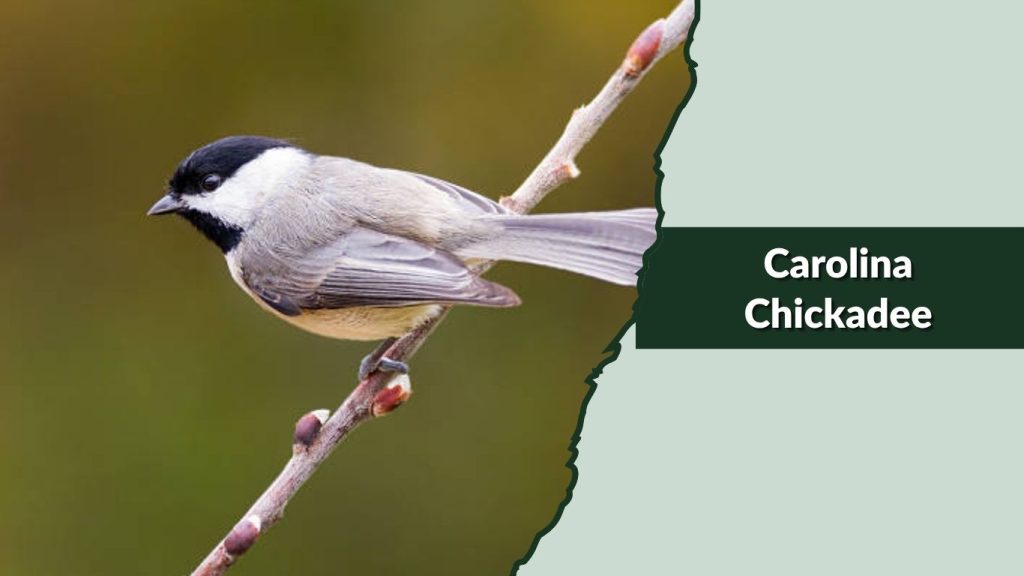
The Carolina Chickadee is a small bird with a black and white head that looks very similar to the Black-capped Chickadee. It is common in the southeastern United States and often appears in gardens, parks, and wooded neighborhoods. Its black cap, white cheeks, and gray body make it a strong match for black and white headed small bird searches.
Identification
- Small bird with black head and white cheeks
- Black throat patch or bib
- Gray back, wings, and tail
- Pale white belly with soft gray sides
- Short bill and rounded body
- Often seen in pairs or small flocks
Where It Lives
The Carolina Chickadee is mostly found in the southeastern and south-central United States. It prefers deciduous forests, mixed woodlands, suburban yards, parks, and areas with mature trees. This small gray bird with black and white head is also a frequent visitor to feeders, especially when sunflower seeds or suet are available.
What It Eats
Carolina Chickadees eat insects, spiders, caterpillars, seeds, and small berries. In spring and summer, they search leaves and branches for insects. During winter, they rely more heavily on seeds and feeder foods, often carrying food away to store it for later.
Behavior
This bird is active, curious, and quick-moving. It often hops along branches, hangs upside down, and gives a sharp chickadee call. Carolina Chickadees are social birds and may join mixed flocks with titmice, nuthatches, and warblers while foraging.
3. Mountain Chickadee
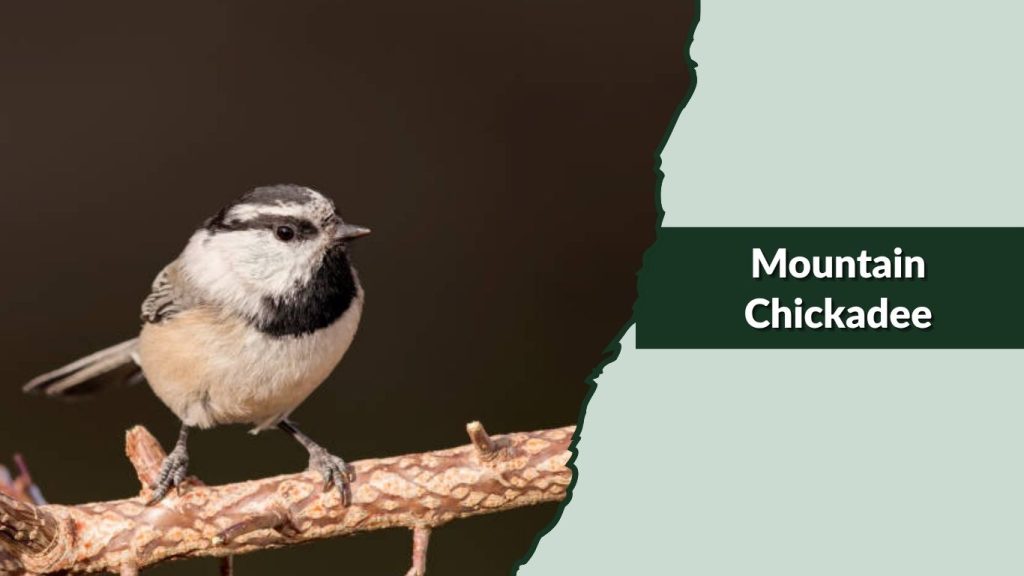
The Mountain Chickadee is a small bird with a black and white striped head, best known for the bright white eyebrow stripe above each eye. This feature helps separate it from other chickadees. It lives mainly in western mountain forests and is easy to recognize by its bold facial pattern.
Identification
- Small bird with black cap and white eyebrow stripe
- White cheeks with black throat patch
- Gray back, wings, and tail
- Pale underside with soft buff sides
- Short bill and rounded shape
- Often seen in conifer trees
Where It Lives
The Mountain Chickadee is found in mountainous areas of western North America. It prefers pine, fir, spruce, and mixed conifer forests. This small bird with black and white striped head is often seen at higher elevations, though it may move lower during winter when food becomes harder to find.
What It Eats
Its diet includes insects, spiders, seeds, berries, and conifer seeds. During warmer months, it searches bark, needles, and branches for insects. In winter, it depends more on seeds and may visit feeders for sunflower seeds, peanuts, and suet.
Behavior
Mountain Chickadees are energetic and social birds. They move quickly through trees, often joining other small birds in feeding flocks. Their calls help them communicate in dense forests, and their bold head markings make them easier to notice than many other small woodland birds.
4. White-crowned Sparrow
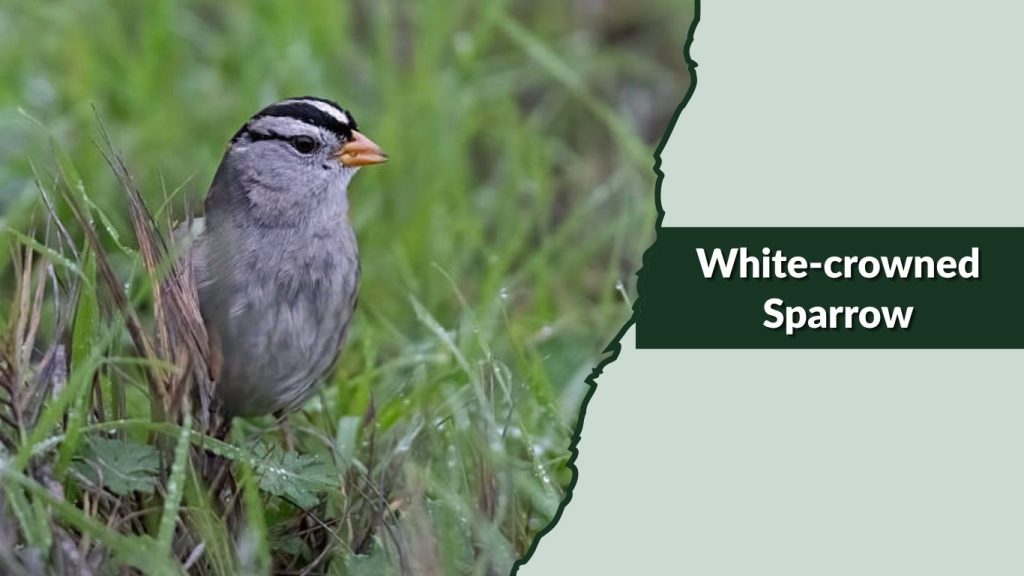
The White-crowned Sparrow is a small bird with a black and white striped head and a brownish-gray body. Its bold crown stripes make it one of the easiest sparrows to identify. This bird often appears in open areas, brushy fields, gardens, and backyard feeding spots.
Identification
- Small bird with black and white striped head
- Pale gray face and breast
- Brown streaked back and wings
- Long tail and rounded body
- Pink or yellowish bill
- Often seen hopping on the ground
Where It Lives
White-crowned Sparrows live across much of North America, depending on the season. They breed in northern and western regions and move south during migration and winter. This small brown bird with black and white striped head is often found in shrubs, hedges, woodland edges, fields, and gardens.
What It Eats
This sparrow mainly eats seeds, grains, weeds, grasses, and small insects. During breeding season, insects become more important, especially for feeding young birds. In winter, it often feeds on the ground beneath shrubs or visits backyard areas with scattered seeds.
Behavior
White-crowned Sparrows are usually seen scratching or hopping on the ground while searching for food. They are more shy than chickadees but can become regular visitors in quiet yards. Their clear whistled song is another helpful clue when identifying this small bird with white and black striped head.
5. White-throated Sparrow
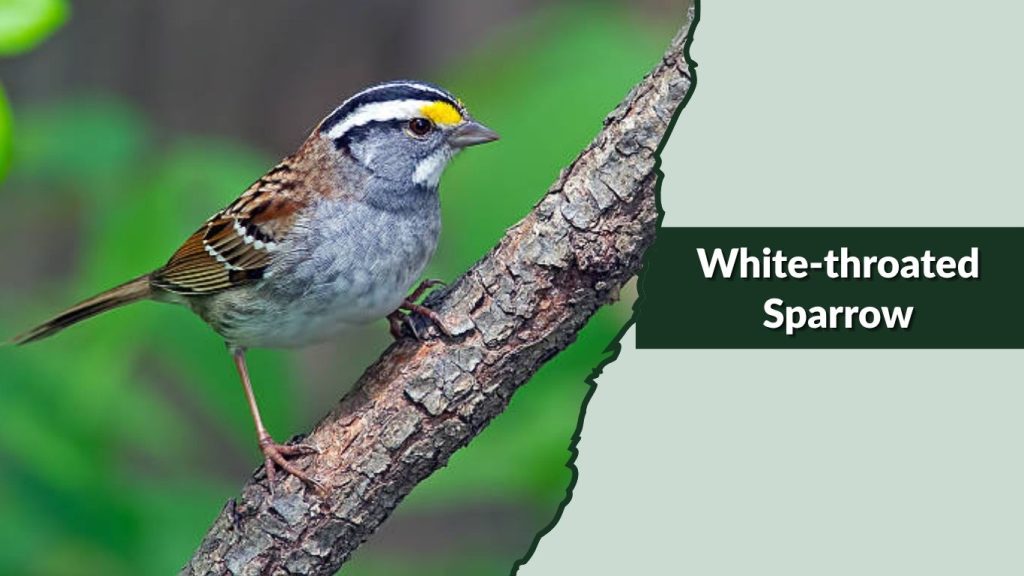
The White-throated Sparrow is a small bird with a black and white striped head, white throat, and brown-streaked body. It is often seen in brushy areas, woodland edges, gardens, and backyards. Its bold head pattern and bright throat patch make it a good match for searches about a small brown bird with black and white striped head.
Identification
- Small bird with black and white striped head
- Bright white throat patch
- Yellow spot between the eye and bill
- Brown streaked back and wings
- Gray breast and pale belly
- Long tail and rounded sparrow shape
Where It Lives
The White-throated Sparrow breeds mostly in Canada and the northern United States, then moves south for winter. It prefers forest edges, thickets, hedges, and brushy fields. In winter, this small bird with white and black striped head is often found scratching under shrubs or visiting backyard feeding areas.
What It Eats
White-throated Sparrows eat seeds, grains, berries, and insects. During spring and summer, insects become important, especially for young birds. In colder months, they feed mostly on seeds and berries, often searching on the ground beneath bushes, weeds, and leaf litter.
Behavior
This sparrow is usually seen hopping or scratching on the ground. It may be shy, but it often stays close to cover. Its clear whistled song is one of its best-known features, and its black and white crown stripes make identification easier.
6. Blackpoll Warbler
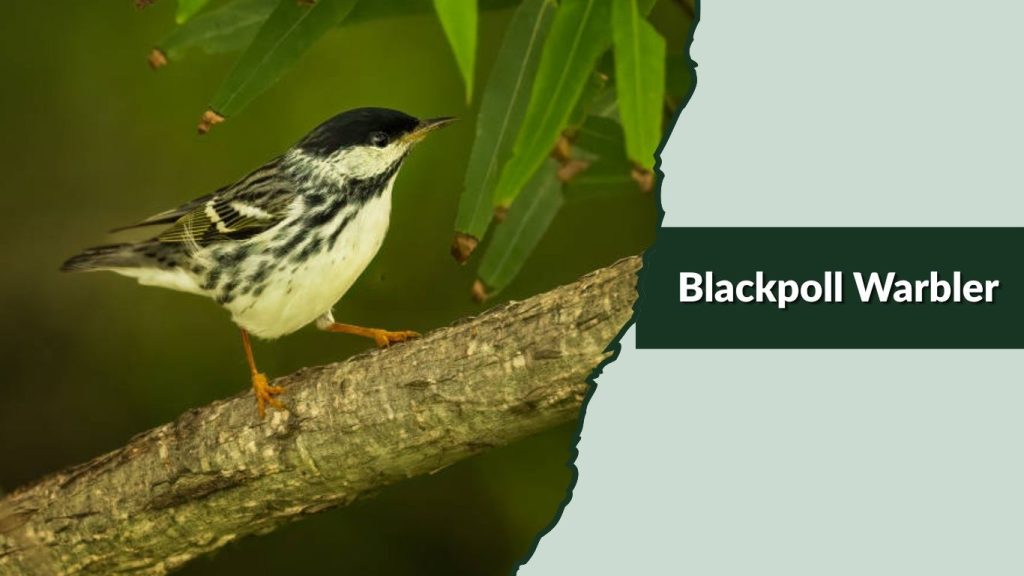
The Blackpoll Warbler is a small bird with a black and white head during breeding season. Males have a black cap, white cheeks, and streaked black-and-white body pattern. This bird is especially noticeable during migration, although it is often active high in trees and can be difficult to spot clearly.
Identification
- Small bird with black cap and white cheeks
- White face with dark streaking
- Black streaks on the sides and back
- White wing bars
- Slender body and thin pointed bill
- Breeding males look more strongly black and white
Where It Lives
Blackpoll Warblers breed in northern forests across Canada and Alaska. During migration, they pass through many parts of North America and may appear in woodlands, parks, and coastal areas. This small black and white headed bird is usually seen in trees, where it searches carefully among leaves and branches.
What It Eats
The Blackpoll Warbler mainly eats insects, spiders, caterpillars, and other small invertebrates. During migration, it may also eat berries and fruit to build energy. Its diet helps support its long-distance migration between North America and South America.
Behavior
This warbler is active, quick, and often stays high in the canopy. It moves through leaves while picking tiny insects from branches. During migration, it becomes one of the most impressive travelers among small birds, flying long distances over land and ocean.
7. Black-and-white Warbler
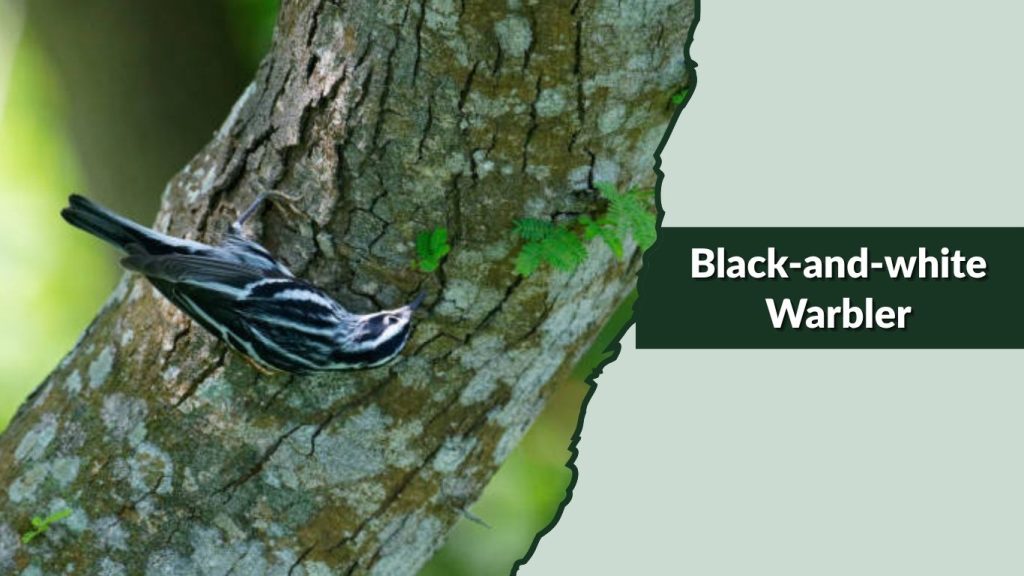
The Black-and-white Warbler is a small bird with black and white striped head and body markings. Unlike many warblers, it often creeps along tree trunks and branches like a tiny nuthatch. Its bold stripes make it one of the best matches for keywords such as small bird with black and white striped head.
Identification
- Small bird with black and white striped head
- Bold black and white body stripes
- Thin pointed bill
- White belly with dark streaks
- Long wings and short tail
- Often climbs along tree bark
Where It Lives
Black-and-white Warblers are found in forests, wooded parks, and shaded areas across much of eastern North America during breeding and migration seasons. They prefer mature trees where they can search bark and branches for insects. In winter, they move to warmer regions, including Central America, the Caribbean, and parts of South America.
What It Eats
This bird mainly eats insects, spiders, beetles, ants, caterpillars, and other small invertebrates. It searches carefully along bark, cracks, and branches instead of feeding mostly among leaves. Its climbing style helps it find hidden prey that other small birds may miss.
Behavior
The Black-and-white Warbler is active and easy to recognize by its creeping movement. It moves up, down, and sideways on trunks and large branches. Its striped head and body pattern make it stand out, even though it is small and often moves quickly.
8. Downy Woodpecker
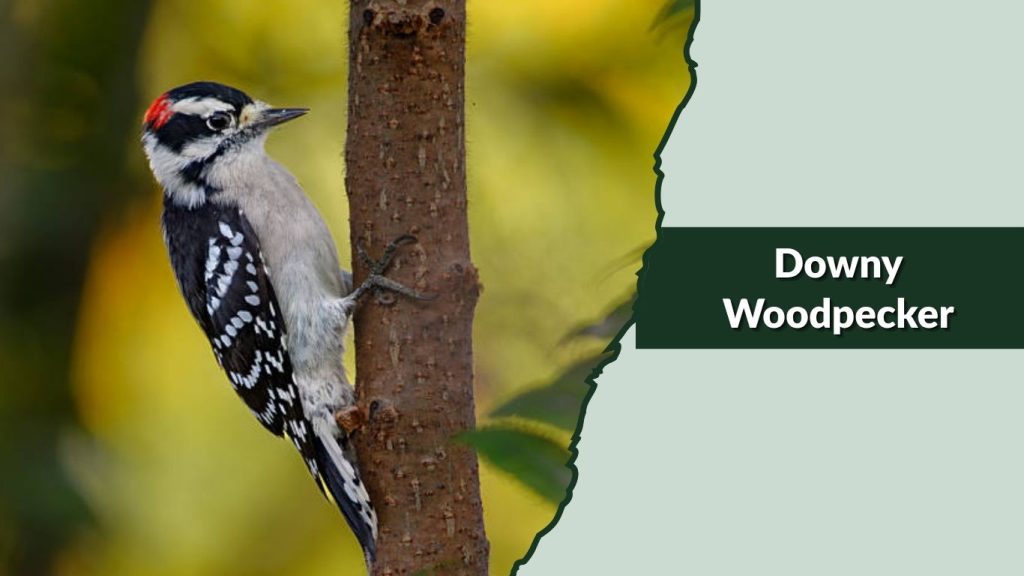
The Downy Woodpecker is a small black and white bird with red spot on head in males. It is the smallest common woodpecker in North America and often visits backyard feeders. Its black-and-white face, white belly, and patterned wings make it a strong match for black and white bird searches.
Identification
- Small black and white bird with red spot on head in males
- Black-and-white striped face
- White belly and black wings with white spots
- Short, straight bill
- Small woodpecker body shape
- Often seen clinging to tree trunks
Where It Lives
Downy Woodpeckers live in forests, parks, orchards, gardens, and suburban neighborhoods. They are widespread across North America and adapt well to areas with trees. This small bird with black and white head is often seen on trunks, branches, fence posts, and suet feeders.
What It Eats
Downy Woodpeckers eat insects, beetle larvae, ants, caterpillars, seeds, berries, and suet. They peck into bark and wood to find hidden insects. In winter, they often visit feeders for suet, sunflower seeds, and peanuts, making them familiar backyard birds.
Behavior
This woodpecker climbs tree trunks and taps on bark while searching for food. Males may drum on branches or other surfaces to mark territory. Although small, the Downy Woodpecker is bold and often comfortable around homes, parks, and feeding stations.
9. Hairy Woodpecker
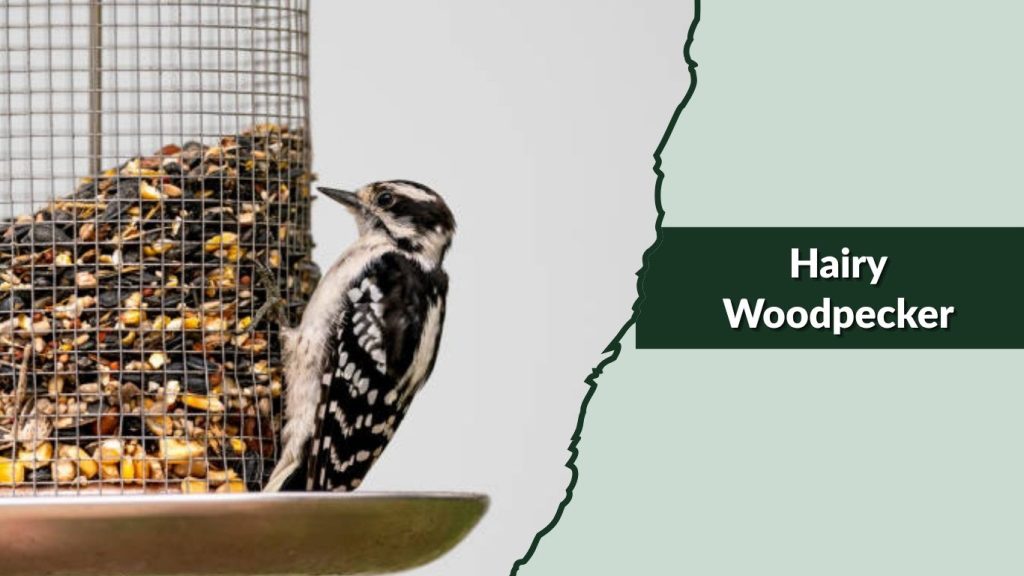
The Hairy Woodpecker is a black and white headed small bird that looks very similar to the Downy Woodpecker but is larger and has a longer bill. Males have a small red patch on the back of the head. Its bold black-and-white face and spotted wings make it easy to connect with these bird identification keywords.
Identification
- Black and white headed small bird
- Long, straight bill
- White belly with black wings and white spots
- Black-and-white striped face
- Male has a small red patch on the head
- Larger than a Downy Woodpecker
Where It Lives
Hairy Woodpeckers live in mature forests, wooded parks, orchards, and suburban areas with large trees. They are found across much of North America. This small black and white bird with red on head is usually seen clinging to trunks or moving along large branches in search of insects.
What It Eats
Hairy Woodpeckers mainly eat insects, especially beetle larvae, ants, caterpillars, and other insects hidden under bark. They also eat seeds, berries, nuts, and suet. Their strong bill helps them dig deeper into bark and wood than smaller woodpeckers.
Behavior
This bird is usually less common at feeders than the Downy Woodpecker, but it may visit suet feeders in quiet yards. It drums loudly on trees to communicate and defend territory. Its longer bill and larger body are the best clues for separating it from the Downy Woodpecker.
10. Red-breasted Nuthatch
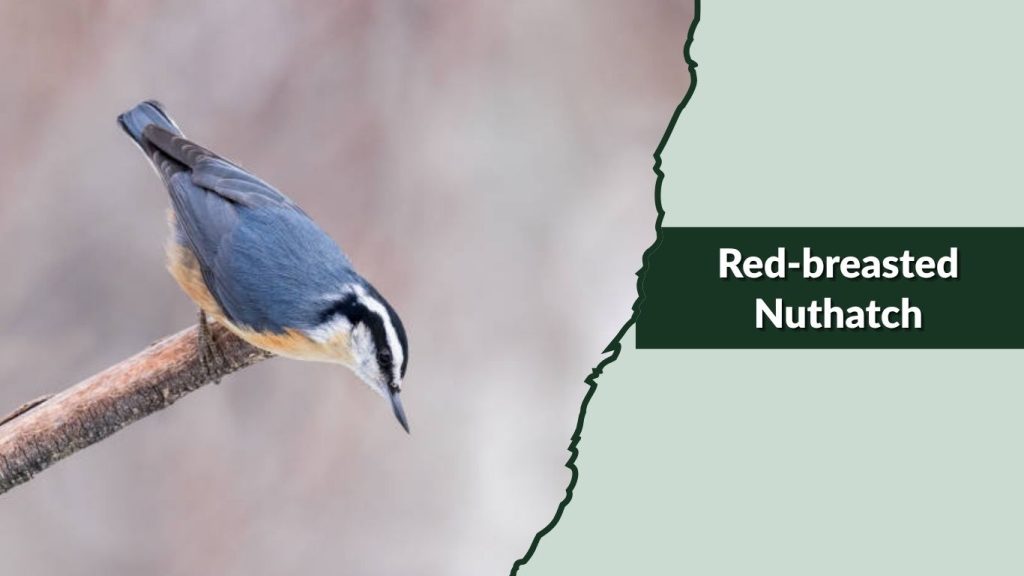
The Red-breasted Nuthatch is a small bird with black and white striped head markings and a warm reddish-orange breast. Its bold black eye stripe, white eyebrow, and gray back make it easy to recognize. It is often seen climbing tree trunks, moving headfirst down bark while searching for insects and seeds.
Identification
- Small bird with black and white striped head
- Black eye stripe with white eyebrow
- Blue-gray back and wings
- Reddish-orange breast and belly
- Short tail and compact body
- Often climbs down tree trunks headfirst
Where It Lives
The Red-breasted Nuthatch lives mainly in coniferous and mixed forests across North America. It prefers areas with spruce, pine, fir, and other evergreen trees. During some winters, it moves into parks, gardens, and backyard feeders, especially when natural seed crops are low.
What It Eats
This bird eats insects, beetles, spiders, caterpillars, seeds, and nuts. Conifer seeds are especially important in colder months. At feeders, it often chooses sunflower seeds, peanuts, and suet, then carries food away to store in bark crevices for later.
Behavior
Red-breasted Nuthatches are active, noisy, and quick-moving. They climb up, down, and sideways on tree trunks with ease. Their nasal calls often reveal their presence before they are seen. Their striped head and orange underside make them a strong match for searches like small bird black and white head orange breast.
11. White-breasted Nuthatch
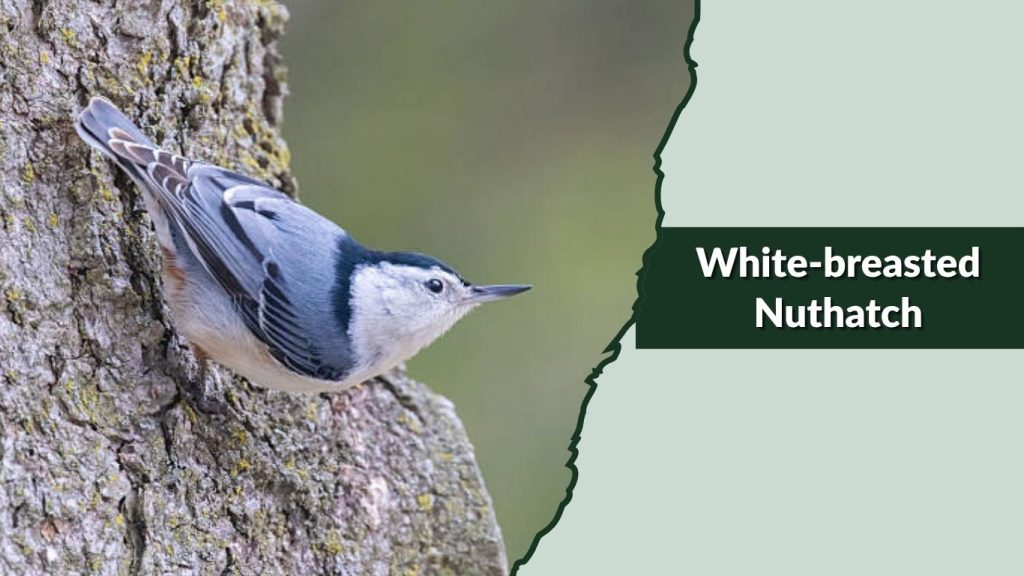
The White-breasted Nuthatch is a small bird with black head and white breast, often seen moving upside down along tree trunks. It has a clean white face, white belly, gray back, and dark cap. This familiar backyard bird is common in forests, parks, and neighborhoods with mature trees.
Identification
- Small bird with black head and white breast
- White face, throat, chest, and belly
- Blue-gray back and wings
- Short tail and strong pointed bill
- Compact body with a large-looking head
- Often climbs headfirst down trees
Where It Lives
White-breasted Nuthatches are found across much of North America. They prefer mature deciduous forests, mixed woodlands, wooded suburbs, parks, and large gardens. This small bird with black head and white belly is often seen near oak, maple, and other broadleaf trees.
What It Eats
Its diet includes insects, beetles, caterpillars, ants, seeds, acorns, nuts, and suet. In warmer months, it searches bark for hidden insects. In winter, it depends more on seeds and nuts and often visits feeders for sunflower seeds and peanuts.
Behavior
This nuthatch is known for climbing down tree trunks headfirst, a behavior that helps separate it from many other small birds. It often wedges seeds into bark cracks and hammers them open. Its loud nasal calls and bold black-and-white head pattern make it easy to notice.
12. Black-crested Titmouse
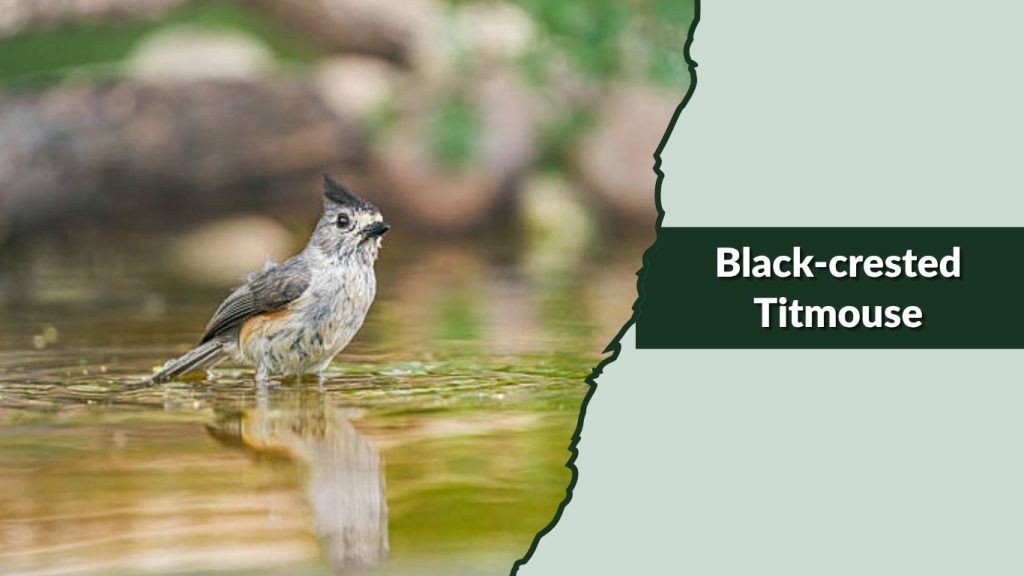
The Black-crested Titmouse is a small gray bird with black and white head markings and a pointed black crest. It looks similar to the Tufted Titmouse but has a darker crest and bolder face pattern. This bird is active, curious, and often found in wooded yards and dry brushy areas.
Identification
- Small gray bird with black and white head
- Pointed black crest on top of the head
- Pale face and gray upperparts
- Whitish belly with soft buff sides
- Short bill and rounded body
- Often seen in pairs or small groups
Where It Lives
The Black-crested Titmouse is mainly found in Texas, Oklahoma, and parts of northeastern Mexico. It lives in oak woodlands, mesquite brush, parks, ranchlands, and suburban yards with trees. This small grey and white bird with black head often visits feeders in areas where it is common.
What It Eats
It eats insects, spiders, caterpillars, seeds, berries, and nuts. During spring and summer, insects are especially important. In winter, it feeds more on seeds and nuts and may come to feeders for sunflower seeds, peanuts, and suet.
Behavior
Black-crested Titmice are bold and vocal birds. They hop through branches, inspect bark and leaves, and sometimes hang upside down while foraging. They may join mixed flocks with chickadees and other small birds. Their black crest makes them stand out from other gray backyard birds.
13. Coal Tit
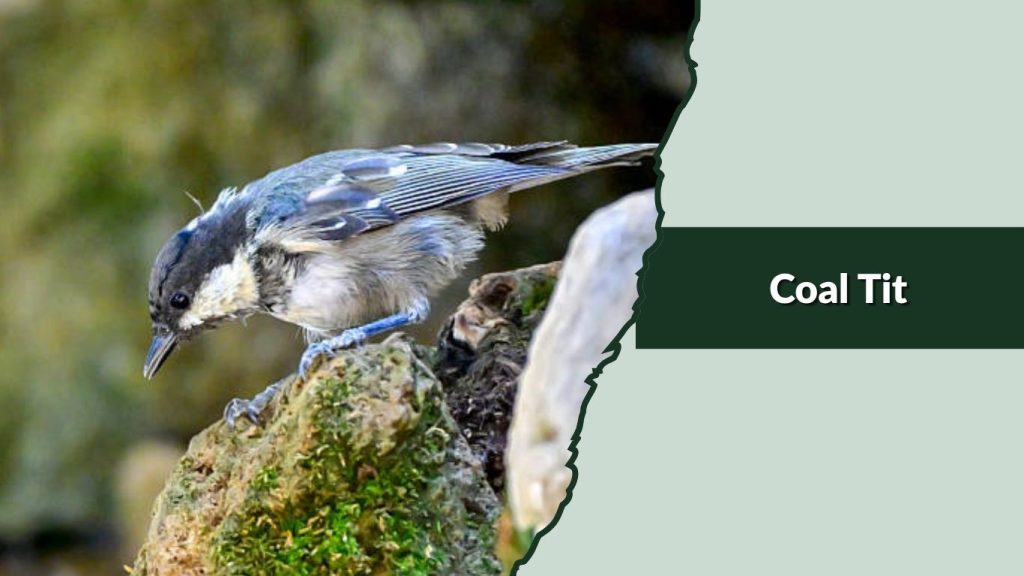
The Coal Tit is a very small bird with black and white head markings, including a black cap and a white patch on the back of the head. It is common in the United Kingdom, Europe, and parts of Asia. Its tiny size and bold head pattern make it a good match for small bird black and white head UK searches.
Identification
- Very small bird with black and white head
- Black cap and black throat
- White cheeks and white nape patch
- Gray back with pale underside
- Two pale wing bars
- Short bill and small rounded body
Where It Lives
Coal Tits live in conifer forests, mixed woodlands, parks, gardens, and hedgerows. In the UK, they are regular garden visitors, especially where feeders and evergreen trees are present. This small British bird with black and white head is often seen moving quickly through branches.
What It Eats
Coal Tits feed on insects, spiders, caterpillars, seeds, and small nuts. In winter, they rely heavily on conifer seeds and feeder foods. They often take seeds away and hide them in bark, moss, or soil, returning later when food is harder to find.
Behavior
This bird is quick, restless, and often travels with other small woodland birds. It may hang from twigs and cones while feeding. Its small size, white cheek patches, and white mark on the back of the head help separate it from other tits and chickadees.
14. Great Tit
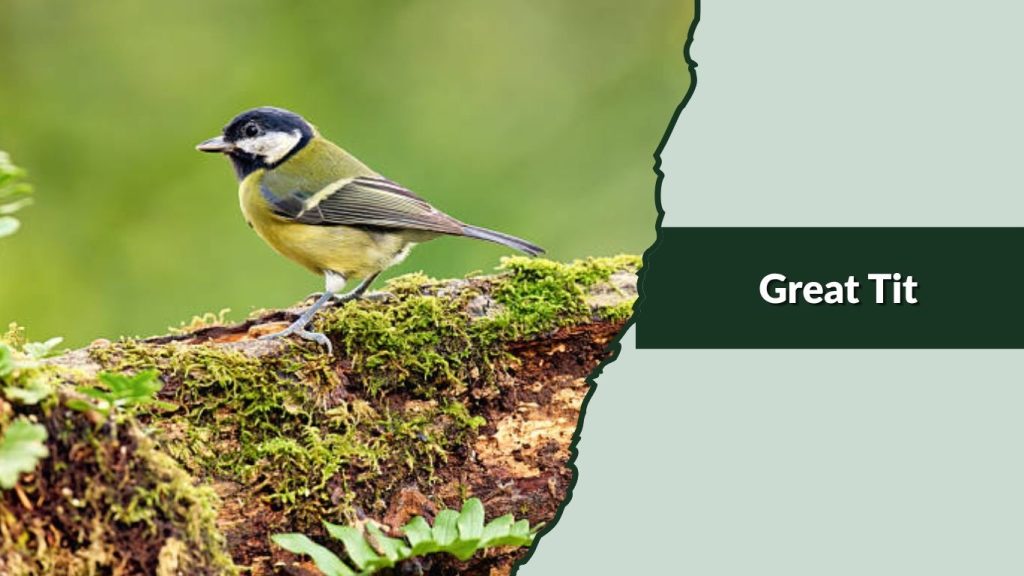
The Great Tit is a small bird with a black head and white cheeks, yellow breast, and olive-green back. It is common across the United Kingdom, Europe, and parts of Asia. Although larger than some tits, it still fits many searches for a small garden bird with black and white head.
Identification
- Small bird with black head and white cheeks
- Bright yellow breast with black center stripe
- Olive-green back and gray-blue wings
- White cheek patches
- Short bill and rounded body
- Often seen in gardens and parks
Where It Lives
Great Tits live in woodlands, gardens, parks, orchards, hedgerows, and suburban areas. They are one of the most familiar garden birds in the UK and Europe. This small bird with black head and white chest often visits feeders, especially in winter and early spring.
What It Eats
Great Tits eat insects, caterpillars, spiders, seeds, nuts, and berries. Caterpillars are especially important during the breeding season. At feeders, they commonly take sunflower seeds, peanuts, fat balls, and suet, making them easy to observe in gardens.
Behavior
Great Tits are bold, adaptable, and vocal. They often inspect branches, leaves, and feeders for food. Their loud, repeated calls are easy to hear in spring. The black head, white cheeks, and yellow breast make them one of the easiest small birds to identify.