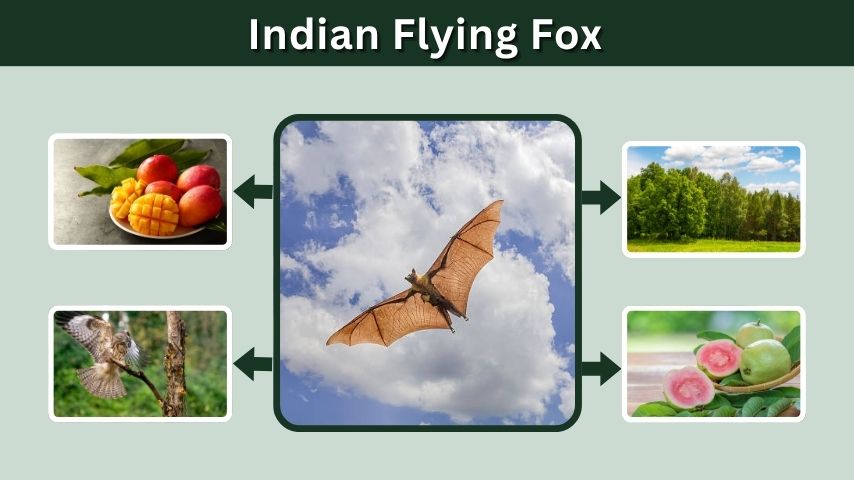
The Indian flying fox is one of the largest bats in the world and one of the most recognizable fruit bats in South Asia. With a fox-like face, large eyes, reddish-brown fur, and a huge wingspan, this bat often attracts attention when it flies over trees at dusk. Although it may look mysterious, the Indian flying fox is an important seed disperser and pollinator that helps support healthy ecosystems.
What Is the Indian Flying Fox?
The Indian flying fox is a large fruit bat native to the Indian subcontinent. It is also called the Indian flying fox bat, greater Indian fruit bat, or Indian fruit bat. Its scientific name is commonly given as Pteropus medius, though many older sources use the synonym Pteropus giganteus.
This animal is not a fox and not a bird. It is a mammal and a true bat. The name “flying fox” comes from its long muzzle, pointed face, and reddish-brown fur, which can make it look somewhat fox-like.
Unlike small insect-eating bats, the Indian flying fox mainly eats fruit, nectar, and flowers. It does not hunt insects in the air. It belongs to the Old World fruit bat family, also known as Pteropodidae.
Indian Flying Fox Quick Facts
| Feature | Details |
| Common name | Indian flying fox |
| Other names | Greater Indian fruit bat, Indian flying fox bat |
| Scientific name | Pteropus medius; older synonym Pteropus giganteus |
| Animal type | Mammal, bat, fruit bat |
| Family | Pteropodidae |
| Diet | Fruit, nectar, flowers |
| Wingspan | Often around 1.2–1.5 m, or about 4–5 ft |
| Habitat | Forests, wetlands, orchards, villages, cities, and tree roosts |
| Activity | Mostly nocturnal |
| Social behavior | Roosts in large colonies |
| Conservation status | Often listed as Least Concern in older references, but local populations face pressure |
Indian Flying Fox Size
The Indian flying fox is famous for its size. It is one of the largest bats in the world, especially when measured by wingspan. While its body is not as heavy as many land mammals, its wings are broad and dramatic when fully spread.
Many adults have a wingspan of about 1.2 to 1.5 meters, or roughly 4 to 5 feet. This means a flying Indian flying fox can look much larger than it appears while hanging upside down in a tree.
Indian Flying Fox Size Comparison
Compared with common small bats, the Indian flying fox is huge. A small house bat may fit easily in a human palm, but an Indian flying fox has long wings and a body more like a small mammal than a tiny backyard bat.
Useful comparisons include:
- Its wingspan can be similar to the height of a young child.
- Its body is much smaller than its wings make it appear.
- It is larger than most insect-eating bats.
- It is smaller than the very largest flying fox species in some island regions.
- In flight, it may look like a dark kite or large bird at dusk.
Because of its size, people sometimes mistake it for a bird when it passes overhead. A closer look shows the leathery wing membranes and fox-like face that identify it as a bat.
What Does the Indian Flying Fox Look Like?
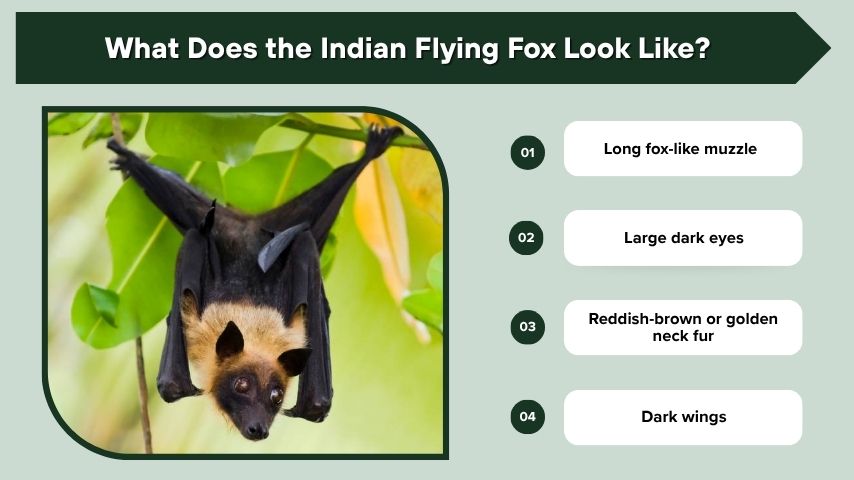
The Indian flying fox has a long face, large eyes, simple ears, and no tail. Its fur is usually dark brown, blackish, or reddish-brown, often with a warmer golden or rusty color around the neck and shoulders. Its wings are dark, leathery, and supported by elongated finger bones.
Its large eyes are important because flying foxes rely heavily on vision. Unlike many small bats, Indian flying foxes do not depend on echolocation for navigation. They use sight and smell to find food and move through their environment.
Main Physical Features
Indian flying foxes are recognized by:
- Long fox-like muzzle
- Large dark eyes
- Reddish-brown or golden neck fur
- Dark wings
- Large wingspan
- Clawed feet for hanging
- Clawed thumbs on the wings
- No visible tail
When roosting, they often wrap their wings around themselves like a cloak. In hot weather, they may fan their wings to cool down.
Where Do Indian Flying Foxes Live?
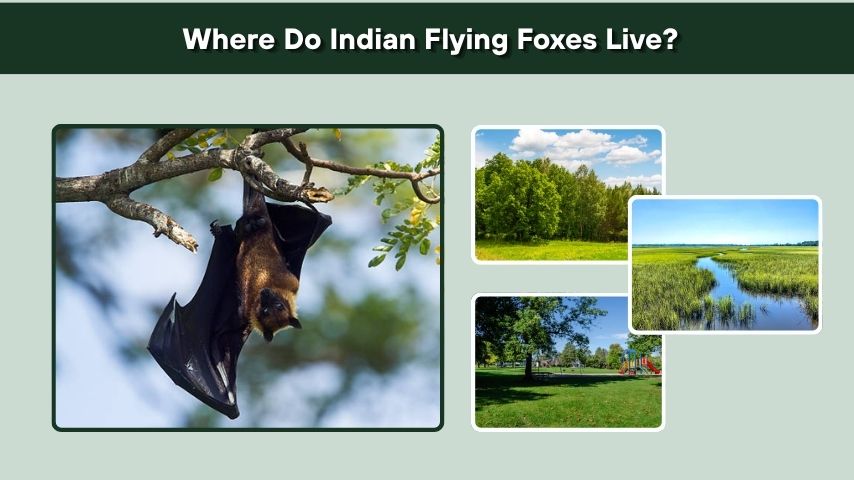
Indian flying foxes live across the Indian subcontinent and nearby regions. Their range includes India, Pakistan, Nepal, Bangladesh, Sri Lanka, and surrounding areas. They are strongly associated with places that have tall trees for roosting and fruiting plants for food.
They can live in forests, wetlands, villages, temple grounds, orchards, and urban parks. In many cities and towns, large colonies can be seen hanging from old trees during the day.
Indian Flying Fox Habitat
Indian flying fox habitat often includes:
- Banyan, fig, tamarind, and other large trees
- Forest edges
- Wetlands and swamps
- Orchards and fruit farms
- Villages and temple areas
- Urban parks and gardens
- Areas near rivers, ponds, or lakes
They often choose roosting trees near water and food sources. A colony may use the same roost for many years if the site remains safe and undisturbed.
Flying Foxes in India
Flying foxes in India are an important part of the country’s wildlife. The Indian flying fox is among the best-known large bats in the region. It is often seen at dawn or dusk, when colonies leave roosting trees to search for food.
In India, these bats may live close to people because fruit trees, gardens, temples, and water bodies create useful habitat. Some communities tolerate or respect them, while others view them as crop pests because they feed on fruit.
The relationship between humans and Indian flying foxes is complicated. They may damage fruit crops, but they also help pollinate plants and spread seeds. Their ecological benefits are often greater than people realize.
Indian Flying Fox Diet
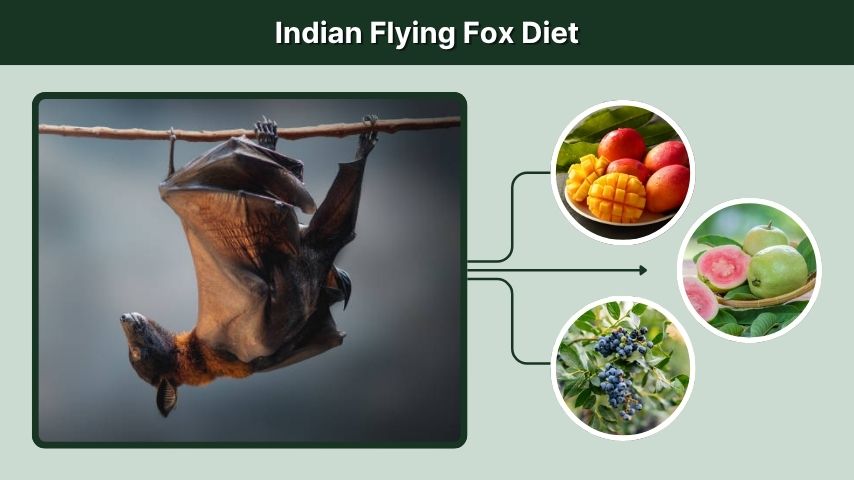
The Indian flying fox is mainly frugivorous, meaning it eats fruit. It also feeds on nectar and flowers. It prefers ripe, soft fruits and may squeeze fruit pulp in its mouth to drink the juice before dropping or spitting out the dry fiber.
Common food sources include mango, guava, fig, banana, and other seasonal fruits. Because it travels at night, it can move between feeding trees and help disperse seeds over long distances.
What Do Indian Flying Foxes Eat?
Indian flying foxes may eat:
- Mangoes
- Figs
- Guavas
- Bananas
- Berries
- Dates
- Flower nectar
- Blossoms
- Other soft ripe fruits
They are not predators of small animals in the usual sense. Their “prey” keyword sometimes appears in searches, but Indian flying foxes are primarily plant-eaters.
Indian Flying Fox Behavior
Indian flying foxes are social animals. During the day, they roost in large groups, sometimes with hundreds of individuals in the same tree. These colonies can be noisy, active, and easy to spot.
At sunset, the bats leave their roost to feed. They may fly several kilometers to reach fruiting trees. After feeding, resting, and digesting, they return to the roost before daylight.
Common Behaviors
Indian flying foxes are known for:
- Hanging upside down in trees
- Roosting in large colonies
- Flying at sunset and night
- Chattering and squawking
- Fanning wings to cool down
- Wrapping wings around the body while resting
- Competing for space in roosting trees
- Traveling long distances to find fruit
They communicate with vocal sounds and body movements. A roosting tree can be loud because many bats are interacting at once.
Indian Flying Fox Sound
Indian flying fox sounds are often described as chatter, squawks, squeals, or harsh calls. These sounds are used during social interactions, disputes, warnings, and colony movement.
A large roost can sound chaotic, especially when bats are shifting positions, arguing over space, or preparing to leave at dusk. These calls are normal behavior and do not mean the bats are attacking.
Do Indian Flying Foxes Use Echolocation?
Most flying foxes, including the Indian flying fox, rely mainly on vision and smell rather than echolocation. This makes them different from many small bats that use high-frequency sound to catch insects in total darkness.
Their large eyes help them navigate at night and locate food. Their strong sense of smell helps them find ripe fruit and flowering trees.
This is why the Indian flying fox has such a fox-like face and large eyes. It is built for visual and scent-based foraging, not high-speed insect hunting.
Indian Flying Fox Lifespan
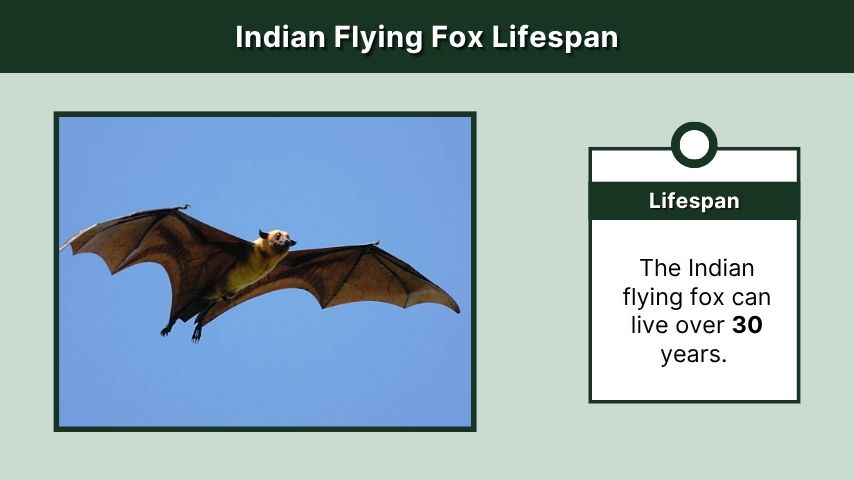
The Indian flying fox can live a long time compared with many small mammals. In captivity, individuals have been recorded living over 30 years. In the wild, lifespan is less certain because animals face predators, food shortages, disease, storms, heat stress, habitat loss, and human disturbance.
A wild Indian flying fox that survives early life may live for many years, but exact averages are difficult to confirm. Like many bats, it has a relatively slow life history compared with small rodents.
Baby Indian Flying Fox
A baby Indian flying fox is called a pup. Females usually give birth to one pup at a time. The young bat depends on its mother for milk, warmth, and protection.
For the first weeks, the pup may cling to its mother. As it grows, it begins hanging independently and later learns to fly. Young Indian flying foxes may remain dependent for several months before becoming fully independent.
Life Cycle
The Indian flying fox life cycle includes:
- Birth as a live pup
- Nursing from the mother
- Clinging to the mother
- Hanging independently
- Learning to fly
- Feeding on fruit
- Becoming a juvenile
- Reaching breeding age
Because they usually have only one pup at a time, population recovery can be slow if colonies are heavily disturbed.
Indian Flying Fox Predators and Enemies
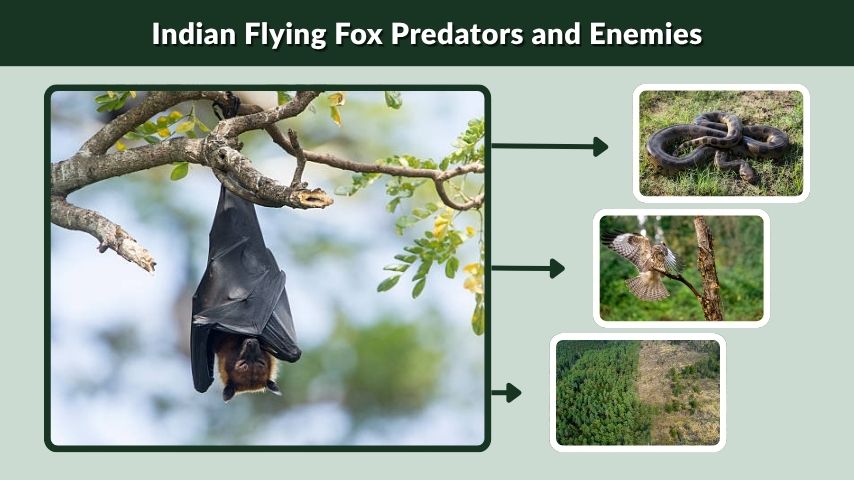
Indian flying foxes are large, but they still have predators. Natural enemies can include snakes, raptors, and other animals that can reach roosting or young bats. Humans are also a major threat in some areas through hunting, persecution, and roost destruction.
Main Predators and Threats
Indian flying fox predators and enemies may include:
- Large snakes
- Birds of prey
- Humans
- Roost disturbance
- Habitat loss
- Heat waves
- Crop protection killing
- Tree cutting
Roost trees are especially important. If a colony’s roosting trees are cut down, the bats may be forced to move, and young or stressed bats may die.
Are Indian Flying Foxes Dangerous?
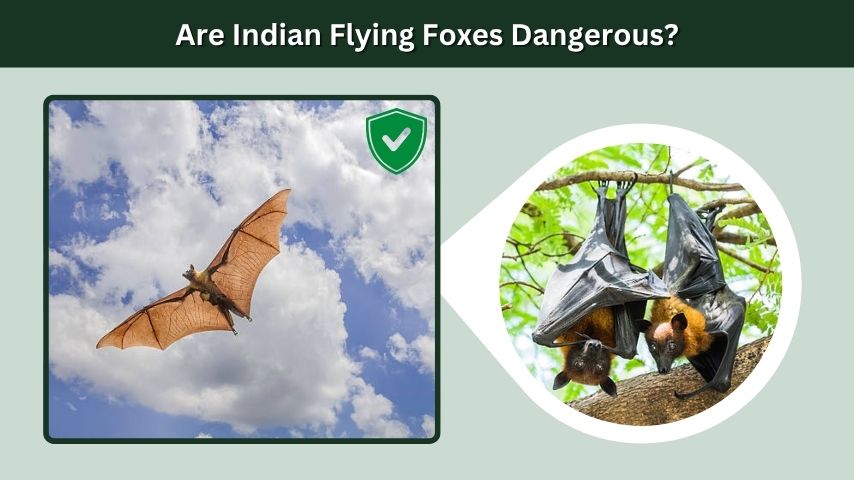
Indian flying foxes are not aggressive animals and do not attack people for food. However, they are wild bats and should never be handled. Like many wild mammals, they may bite if frightened, injured, trapped, or picked up.
There are also disease concerns around bats in general. The safe rule is simple: do not touch wild bats, do not disturb roosts, and keep pets and children away from sick, injured, or dead bats.
Safety Around Indian Flying Foxes
Follow these tips:
- Never handle a wild flying fox.
- Do not disturb roosting colonies.
- Avoid contact with bat saliva, urine, and droppings.
- Do not eat fruit that appears contaminated by bats.
- Contact wildlife professionals if a bat is injured or trapped.
- Seek medical advice if bitten or scratched by any bat.
Observing them from a distance is safe and often fascinating.
Is the Indian Flying Fox Endangered?
The conservation status of the Indian flying fox can be confusing because older and newer taxonomic names are used across different sources. Many references list the species under Pteropus giganteus, while current naming often uses Pteropus medius. Some older sources list it as Least Concern, while local populations may still face serious pressure.
Even when a species is not globally endangered, it can be threatened in specific regions. For Indian flying foxes, major concerns include tree cutting, loss of roosting sites, conflict with fruit growers, hunting, and disturbance near colonies.
Protecting large roost trees is one of the most important steps for conserving this species.
Indian Flying Fox as a Pet or for Sale
Searches like “Indian flying fox pet” and “Indian flying fox for sale” appear in keyword data, but this bat is not a suitable pet. Indian flying foxes are large, social, nocturnal, messy, and require huge flight space, specialized diets, veterinary expertise, and legal permits.
In many places, keeping native wildlife or bats privately is illegal or highly restricted. Even where rules differ, private ownership is not recommended.
Why Indian Flying Foxes Should Not Be Pets
They are poor pets because they:
- Need large flight enclosures
- Live in social colonies
- Are active at night
- Require fresh fruit and specialized nutrition
- Can become stressed in captivity
- May bite if handled
- May carry disease risks
- May be protected by wildlife laws
The best way to enjoy them is through wildlife watching, documentaries, conservation centers, and responsible zoo exhibits.
Indian Flying Fox in Adopt Me
“Indian flying fox Adopt Me” is a game-related keyword, not a wildlife-care keyword. In games, a flying fox may be treated as a collectible pet, but real Indian flying foxes are wild animals with complex needs.
A real Indian flying fox cannot be cared for like a virtual pet. It needs flight space, social contact with other bats, expert care, and legal protection.
Fun Facts About the Indian Flying Fox
The Indian flying fox is one of the most impressive bats in Asia. Its size, social life, and ecological role make it much more than a spooky night animal.
Interesting Facts
- It is one of the largest bats in the world.
- It is a fruit bat, not an insect-eating bat.
- It has a fox-like face and large eyes.
- It usually roosts in trees, not caves.
- Colonies can include hundreds of bats.
- It helps spread seeds across long distances.
- It feeds mostly at night.
- It uses sight and smell more than echolocation.
- It may travel many kilometers to find food.
- It plays an important role in forest regeneration.
FAQs
How big is an Indian flying fox?
An Indian flying fox is one of the largest bats in the world. Its wingspan is often around 1.2 to 1.5 meters, or about 4 to 5 feet. Its body is much smaller than its wings make it appear during flight.
What do Indian flying foxes eat?
Indian flying foxes mainly eat ripe fruit, nectar, and flowers. Their diet can include mangoes, figs, guavas, bananas, berries, dates, blossoms, and other soft fruits. They often squeeze fruit pulp for juice and may drop the dry fiber.
Where do Indian flying foxes live?
Indian flying foxes live across the Indian subcontinent, including India, Pakistan, Nepal, Bangladesh, and Sri Lanka. They roost in large trees near forests, wetlands, orchards, villages, temples, cities, and water sources.
Are Indian flying foxes dangerous?
Indian flying foxes are not aggressive, but they are wild bats and should not be handled. They may bite if trapped or frightened, and bats can carry disease risks. Observe them from a distance and contact wildlife experts for injured bats.
Can you keep an Indian flying fox as a pet?
No, an Indian flying fox is not suitable as a pet. It needs large flight space, social colony life, expert diet management, veterinary care, and legal permits. In many areas, keeping flying foxes privately may be illegal or restricted.