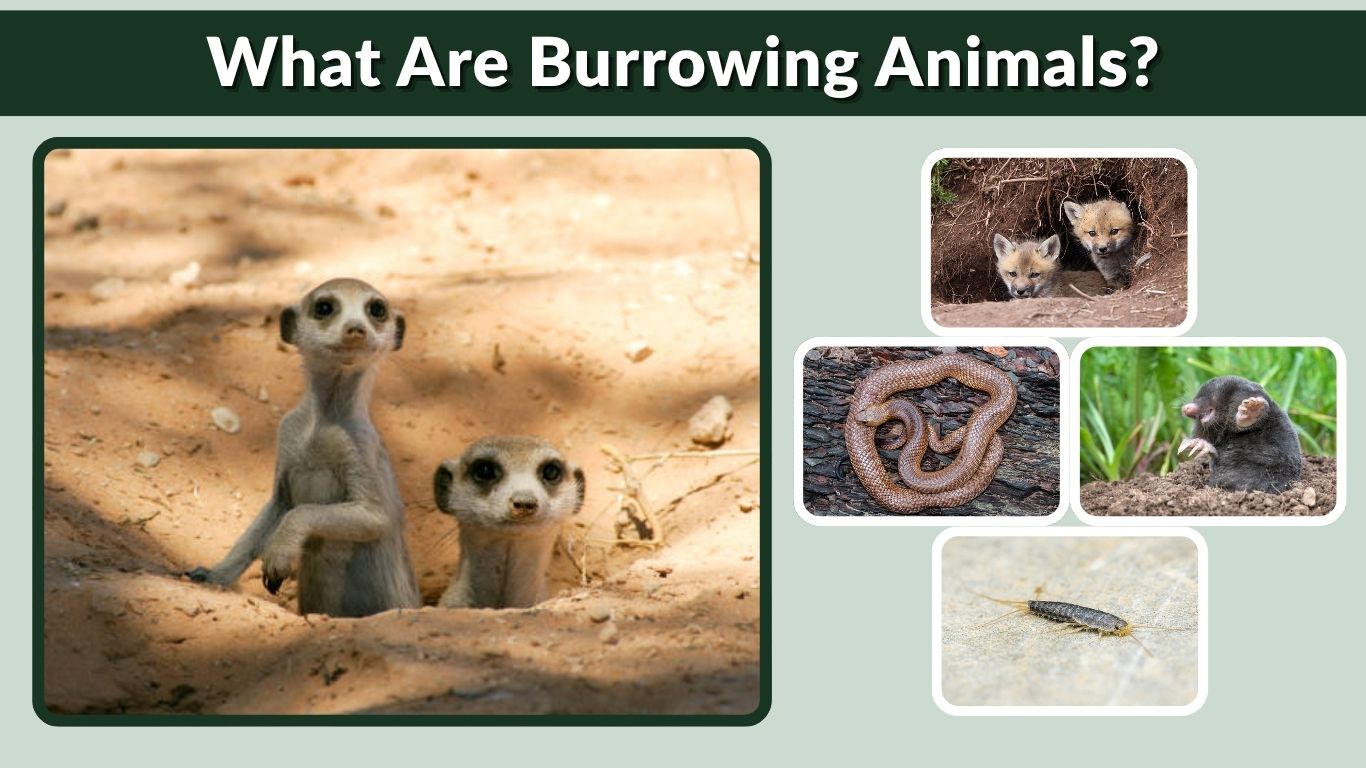
Burrowing animals are fascinating creatures that live most of their lives underground, creating tunnels and holes in soil, sand, or even rock. These animals play an important role in ecosystems by improving soil structure, aiding plant growth, and even contributing to natural processes like weathering. Understanding what burrowing animals are, why they burrow, and how they interact with the environment helps explain their importance in both biology and earth science.
What Are Burrowing Animals? (Meaning and Definition)
Burrowing animals are animals that dig into the ground to create shelters, nests, or living spaces. These underground spaces, known as burrows, provide protection from predators, harsh weather, and extreme temperatures.
In simple terms, a burrowing animal is any animal that spends a significant amount of time digging or living underground. These animals can range from small insects to larger mammals. A burrowing animal is often referred to simply as a “burrower.”
Burrows can vary in complexity. Some animals create simple holes, while others build extensive tunnel systems with multiple chambers for sleeping, storing food, and raising young.
Common examples include rabbits, moles, ants, and certain types of snakes. Each of these animals uses burrowing as a survival strategy, making it a key behavioral trait.
Why Do Animals Burrow?
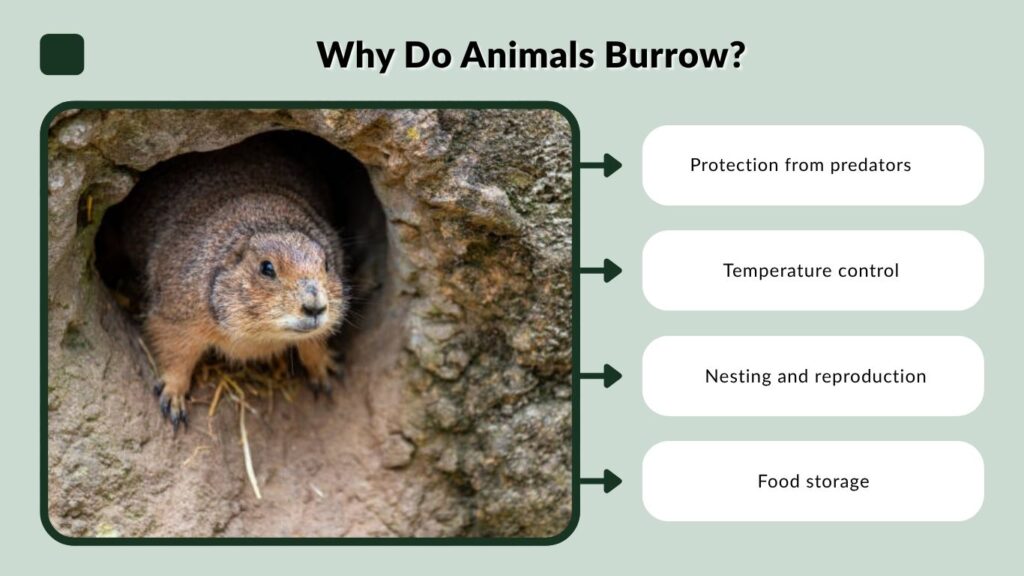
Animals burrow for several important reasons that help them survive in different environments.
- Protection from predators: Living underground keeps animals hidden and safe from many threats
- Temperature control: Burrows provide a stable environment, protecting animals from extreme heat or cold
- Nesting and reproduction: Many animals use burrows to raise their young in a secure space
- Food storage: Some species store food inside their burrows for later use
These advantages make burrowing an effective survival strategy. For many species, life underground offers more safety and comfort than staying on the surface.
Types of Burrowing Animals
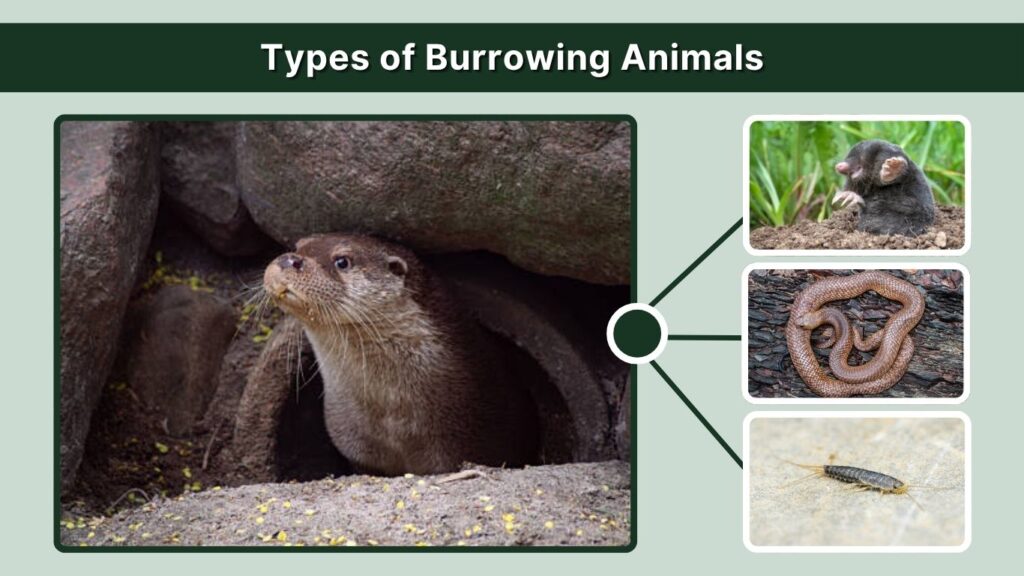
Burrowing animals can be grouped into different categories based on their biological classification. Each group has unique ways of digging and living underground.
Mammals
Many mammals are well-known burrowers. Animals like moles, rabbits, and groundhogs use their strong limbs and claws to dig tunnels. These animals often create complex burrow systems and spend most of their time underground.
Reptiles
Some reptiles, including certain snakes like burrowing asps, also live underground. These animals typically have smooth, elongated bodies that allow them to move easily through soil and sand.
Insects
Insects are among the most common burrowing animals. Ants, termites, and beetles dig into the ground to build colonies. Their burrows can be highly organized, with separate chambers for different activities.
Each type of burrowing animal has adapted its body and behavior to suit its underground lifestyle.
Examples of Burrowing Animals
There are many examples of burrowing animals across different species, each with unique characteristics.
Rats are a common example of burrowing animals. They dig tunnels in soil, especially in urban and rural areas, to create nests and find shelter. Their burrows often have multiple entry and exit points.
Moles are another well-known burrower. They live almost entirely underground and are expert diggers, creating extensive tunnel systems while searching for food like insects and worms.
Groundhogs, also known as woodchucks, dig large burrows that can include several chambers. These burrows are used for sleeping, raising young, and hibernating.
Some snakes, such as burrowing asps, also dig or use existing holes to live underground. Their bodies are specially adapted for moving through tight spaces.
These examples show how burrowing behavior exists across many types of animals.
Adaptive Features of Burrowing Animals
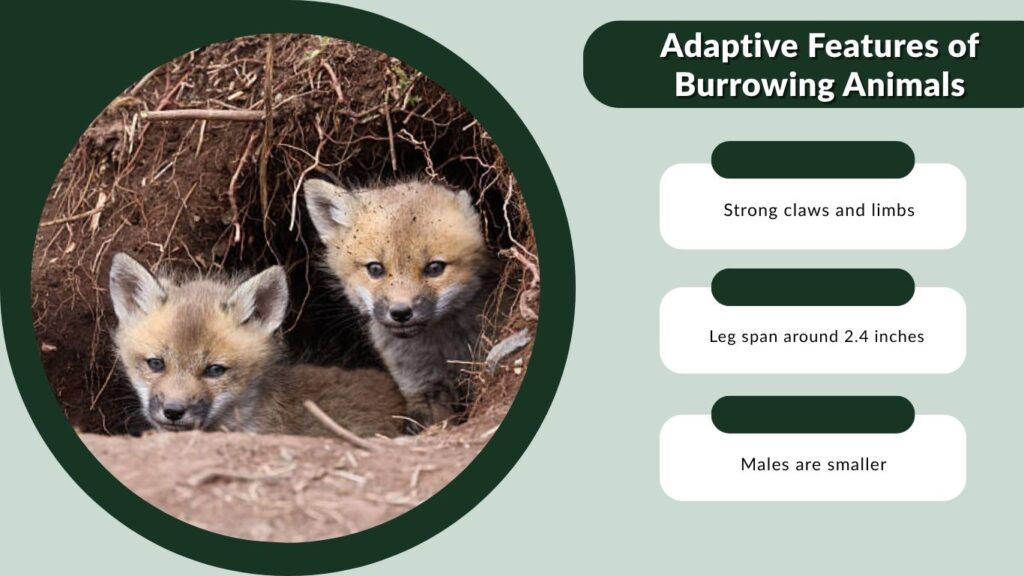
Burrowing animals have developed special physical and behavioral adaptations that help them survive underground.
- Strong claws and limbs: Many burrowing animals have powerful front legs and sharp claws for digging through soil
- Streamlined bodies: Smooth and narrow body shapes allow animals to move easily through tunnels
- Reduced eyesight: Since light is limited underground, some animals have smaller or less developed eyes
- Enhanced senses: Many rely on touch, smell, or vibrations to navigate and find food
These adaptations make burrowing efficient and help animals thrive in environments where other species might struggle.
Burrowing Animals and Weathering
Burrowing animals play an important role in a natural process called weathering. Weathering is the breakdown of rocks and soil over time, and it can happen through physical, chemical, or biological means.
When animals dig into the ground, they loosen soil and disturb the surface layers. This activity exposes deeper layers of soil and rock to air and water, which can speed up the weathering process.
As burrowing animals move through the ground, they create tunnels that allow water to seep deeper into the soil. This can cause rocks to crack and break apart more easily. Over time, these small changes contribute to the gradual breakdown of the.
Because of this, burrowing is considered a form of biological weathering. At the same time, it also contributes to mechanical weathering by physically breaking and moving soil and rock particles.
This natural activity helps shape landscapes and improves soil quality, making it easier for plants to grow.
What Type of Weathering Is Burrowing by Animals?
Burrowing by animals is mainly classified as biological weathering, but it also contributes to mechanical weathering. This is because living organisms are directly involved in breaking down soil and rock.
When animals dig into the ground, they physically disturb and loosen the soil. This action weakens the structure of rocks and exposes them to natural elements like air and water. Over time, these exposed rocks begin to crack and break apart.
For example, when a rodent digs a tunnel, it may create small fractures in the surrounding soil and rock. Water can then enter these cracks, expanding them further and accelerating the breakdown process.
So, burrowing animals play a dual role:
- As biological agents, they initiate the process
- As mechanical forces, they physically break materials apart
This makes them an important part of natural landscape formation.
How to Identify Burrowing Animal Holes
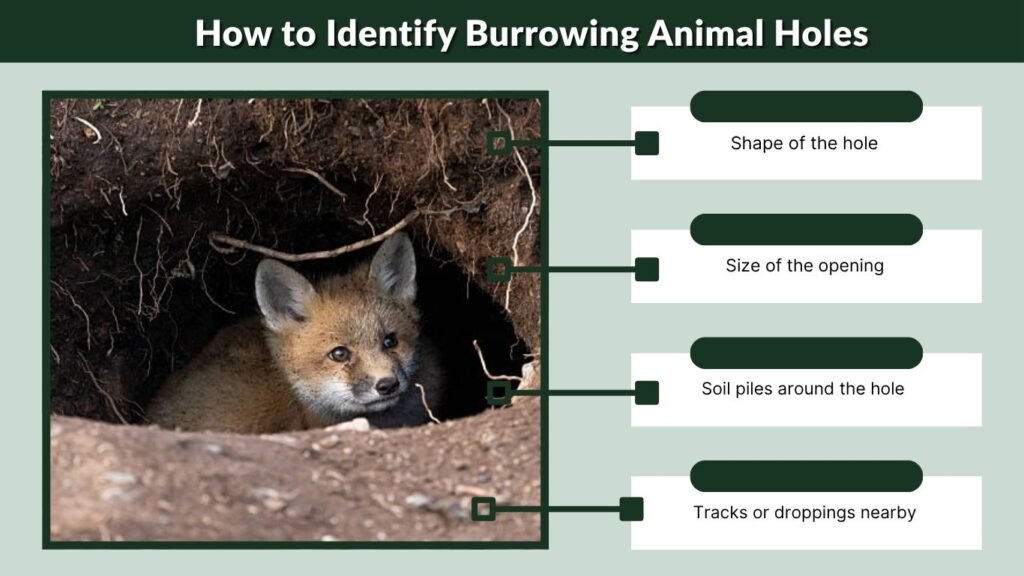
Identifying burrowing animal holes can help you understand which animals are present in an area. Different species create distinct types of burrows.
Here are some key signs to look for:
- Shape of the hole: Round holes are common for rodents, while oval or irregular shapes may indicate reptiles
- Size of the opening: Small holes often belong to insects or small mammals, while larger openings may indicate animals like rabbits or groundhogs
- Soil piles around the hole: Fresh mounds of dirt suggest active burrowing
- Tracks or droppings nearby: These can help identify the specific animal
For example, mole burrows often appear as raised ridges in the soil, while rabbit burrows usually have a clean, open entrance.
Observing these details can help you distinguish between different burrowing animals without seeing them directly.
Interesting Facts About Burrowing Animals
Burrowing animals are not only important but also quite fascinating. Many of them have unique abilities that make them highly specialized for underground life.
Some animals, like moles, can dig tunnels at an արագ pace, allowing them to create extensive underground networks in a short time. Others, such as certain desert rodents, can burrow deep into the ground to escape extreme heat.
There are also animals that spend almost their entire lives underground, rarely coming to the surface. These creatures rely completely on their adaptations to survive in dark, enclosed spaces.
Additionally, burrowing helps improve soil aeration, which benefits plant growth and overall ecosystem health.
FAQ
Are rats burrowing animals
Yes, rats are burrowing animals. They dig tunnels in soil to create nests, store food, and protect themselves from predators. Their burrows often have multiple entrances and can be found in both urban and rural environments.
What type of weathering is caused by burrowing animals
Burrowing animals cause biological weathering because they are living organisms that break down soil and rock. Their digging also contributes to mechanical weathering by physically loosening and fragmenting materials.
What is an example of a burrowing animal
Common examples of burrowing animals include moles, rabbits, ants, and groundhogs. Each of these animals digs into the ground to create shelter and survive in different environments.
Why is burrowing important in nature
Burrowing is important because it improves soil structure, increases air circulation in the ground, and helps with water movement. It also contributes to weathering, which plays a role in shaping the Earth’s surface over time.
Conclusion
Burrowing animals are an essential part of both ecosystems and natural geological processes. They dig into the ground for survival, creating shelters and protecting themselves from environmental challenges. At the same time, their activity helps improve soil quality and contributes to weathering by breaking down rocks and loosening soil.