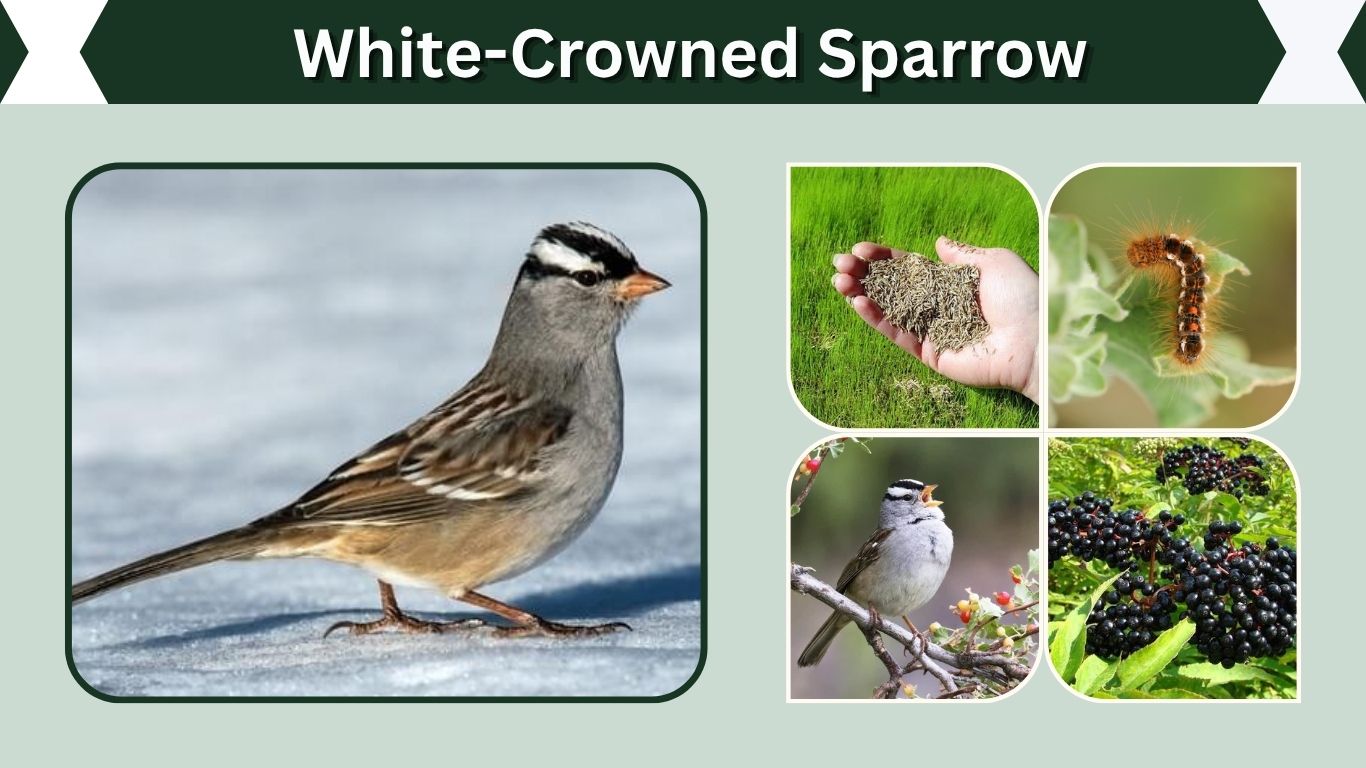
The White-crowned Sparrow is a handsome North American songbird recognized by its bold black-and-white head stripes, pale bill, gray breast, and long tail. Often seen hopping beneath shrubs or bird feeders, these sparrows inhabit tundra, mountain meadows, forest edges, farms, parks, and backyards. Adults are easy to recognize, although brown-crowned juveniles can be more challenging. This guide covers White-crowned Sparrow identification, male and female differences, song, diet, habitat, migration, nesting, and similar species.
What Is a White-Crowned Sparrow?
The White-crowned Sparrow (Zonotrichia leucophrys) is a medium-sized New World sparrow in the family Passerellidae. It is slightly larger than a Song Sparrow and has a rounded body, relatively small bill, and noticeably long tail. Although strongly associated with North America, its seasonal distribution varies among regions and subspecies.
| Feature | Description |
| Scientific name | Zonotrichia leucophrys |
| Length | 5.9–6.3 inches |
| Weight | 0.9–1 ounce |
| Wingspan | 8.3–9.4 inches |
| Main colors | Gray, brown, black, and white |
| Diet | Seeds, grains, berries, and insects |
| Habitat | Tundra, scrub, fields, forest edges, and backyards |
| Nest location | Ground or low shrubs |
Adult birds have clean gray underparts, streaked brown wings, two pale wing bars, and a long brown tail. Their most recognizable feature is the crown pattern formed by broad black and white stripes.
White-Crowned Sparrow Identification
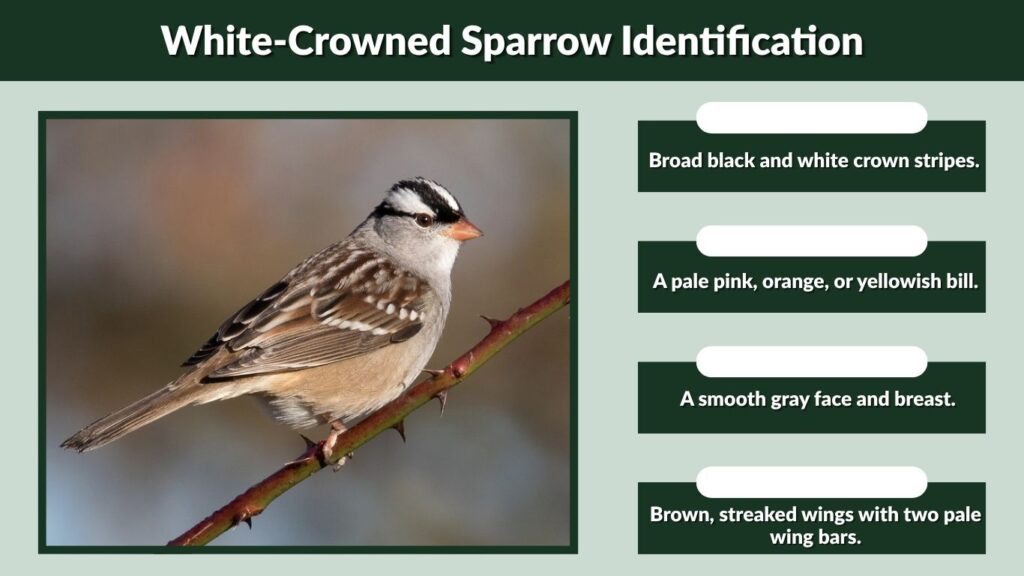
Correct identification requires looking at the bird’s head, breast, bill, wings, size, and behavior. Age and geographic variation can change the appearance of the crown and bill.
Adult Identification Features
An adult White-crowned Sparrow usually has:
- Broad black and white crown stripes
- A pale pink, orange, or yellowish bill
- A smooth gray face and breast
- Brown, streaked wings with two pale wing bars
- A relatively long, dark tail
- An unstreaked or lightly marked belly
- A large, upright appearance for a sparrow
Bill color and head markings vary geographically. Pacific Coast populations may have yellowish bills and slightly duller crown stripes, while birds from other regions may show orange or pink bills and darker markings around the eyes.
White-crowned Sparrows commonly remain close to protective vegetation. Watch for them hopping on the ground, scratching through fallen leaves, or perching low in hedges and shrubs.
Male vs. Female White-Crowned Sparrow
Male and female White-crowned Sparrows look extremely similar. Both sexes can display the same bold crown, gray breast, brown wings, and pale bill, so plumage alone is generally not a reliable way to determine sex.
Behavior may provide clues during the breeding season. Males perform most of the loud, territorial singing and often arrive at nesting areas before females. Females occasionally sing, particularly during disputes over territory or food, but their songs tend to be quieter and more variable.
Juvenile and Immature Identification
A juvenile White-crowned Sparrow looks considerably different from an adult. Newly fledged juveniles have heavily streaked breasts and bellies, mottled brown backs, and finely streaked brown heads.
As the bird enters its first winter, its body begins to resemble an adult’s, but the crown remains tan and brown rather than black and white. These brown crown stripes are one of the best features for recognizing an immature White-crowned Sparrow.
White-Crowned Sparrow Song and Call
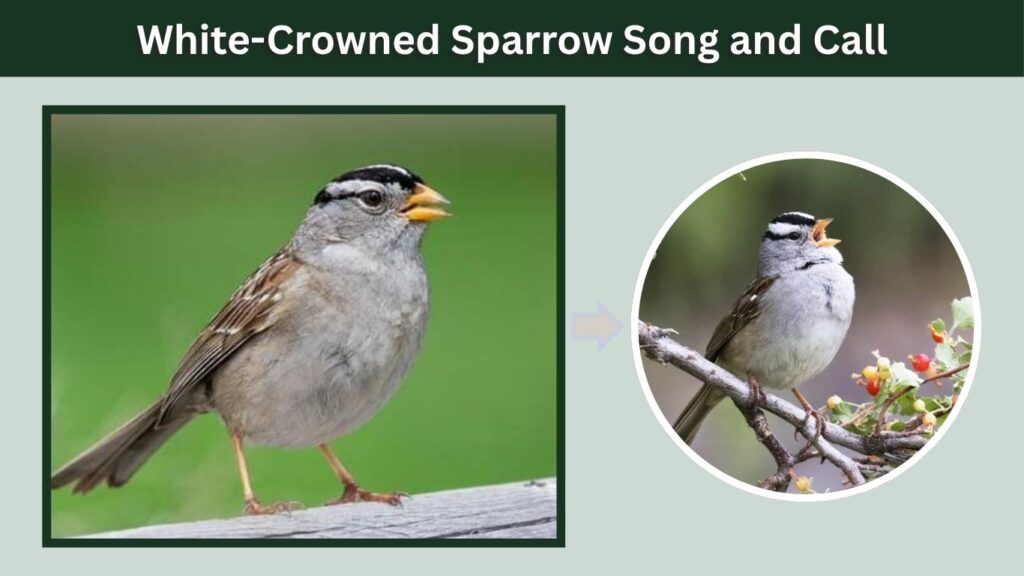
The White-crowned Sparrow’s song normally begins with a clear, sweet whistle. This is followed by several jumbled whistles and finishes with a buzz or rapid trill. A complete song generally lasts about two or three seconds.
Different populations have recognizable song dialects. Young males learn the basic song pattern during their first few months by listening to birds around their birthplace rather than simply copying their fathers. Because many males return near their natal areas to breed, local dialects can continue across generations.
The species also produces several calls. A frequently heard call is a sharp “pink” or “tink” note, used during alarm situations and communication. During conflicts, birds may produce harsher, rasping sounds.
White-Crowned Sparrow Range, Migration, and Habitat
White-crowned Sparrows occupy a wide range of environments across North America. Their location changes considerably with the season and the population involved.
Where Do White-Crowned Sparrows Live?
They breed across Alaska, northern Canada, mountainous western regions, and parts of the Pacific Coast. Breeding habitats include Arctic tundra, alpine meadows, coastal scrub, open boreal forest, and grassy areas containing scattered shrubs.
During winter and migration, they appear in weedy fields, hedgerows, farms, thickets, roadsides, gardens, parks, and suburban backyards. They are generally more numerous in western North America, while eastern birds are often less common migrants or winter visitors.
Do White-Crowned Sparrows Migrate?
Many populations are strongly migratory, especially those breeding in northern or mountainous regions. They generally travel at night between northern breeding grounds and more southerly wintering areas.
Some Pacific Coast populations remain in the same general region throughout the year. Across much of the United States, migrating or wintering birds begin appearing around September and leave for their breeding grounds during March or April.
Preferred Habitat
White-crowned Sparrows need a mixture of open feeding ground and nearby cover. They frequently use places where grass, exposed soil, and low vegetation meet dense shrubs.
Tangles of brush provide protection from predators, while open ground allows the birds to locate fallen seeds and insects. This combination makes overgrown field borders, woodland edges, hedges, and brushy backyards particularly attractive.
White-Crowned Sparrow Diet and Feeding Behavior
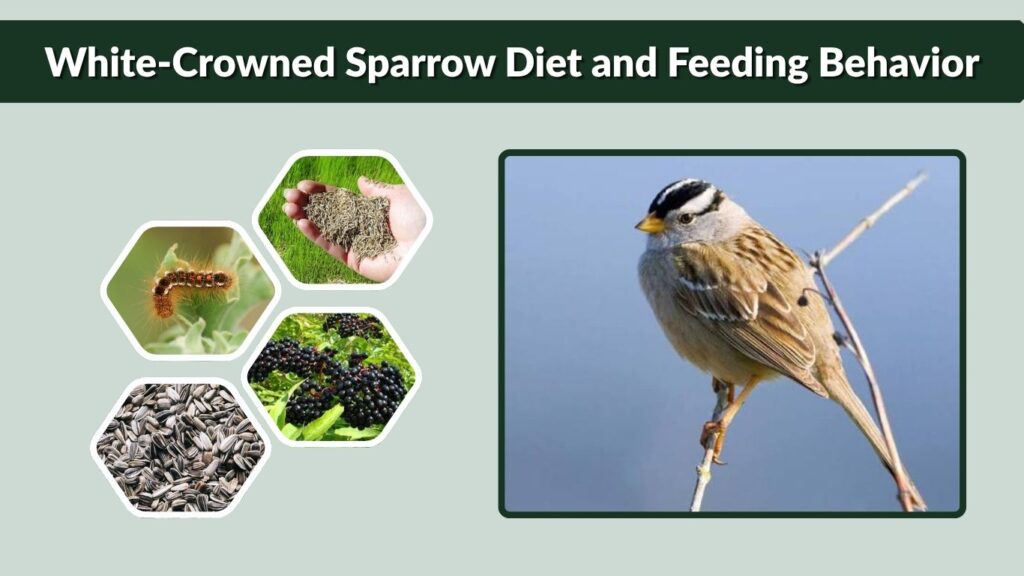
White-crowned Sparrows are omnivorous birds whose diet changes with the season. Seeds dominate during colder months, while insects become more important during the breeding season.
What Do White-Crowned Sparrows Eat?
Common foods include:
- Grass and weed seeds
- Sunflower seeds
- Oats, wheat, barley, and corn
- Caterpillars and beetles
- Wasps and other insects
- Spiders
- Elderberries and blackberries
- Small fruits, buds, and flowers
Young sparrows are fed mainly insects because growing chicks require protein-rich food. Adults also consume more insects during summer but rely heavily on seeds and plant material in winter.
How They Find Food
These sparrows forage mainly by hopping or running across the ground. They sometimes perform a “double-scratch,” jumping backward with both feet to uncover food beneath leaves before moving forward to grab it.
Outside the nesting season, White-crowned Sparrows frequently feed in flocks. They may forage beneath bird feeders instead of perching directly on them, collecting seeds dropped by finches and other feeder birds.
White-Crowned Sparrow Nesting, Eggs, and Young
White-crowned Sparrow nesting habits depend partly on location. Northern birds usually nest on or close to the ground because tall vegetation is limited, while Pacific Coast birds commonly place nests several feet above the ground in shrubs.
Nest Construction
The female builds an open cup using coarse grasses, twigs, moss, bark, pine needles, leaves, and rootlets. She lines the inside with fine grass, feathers, hair, or other soft materials.
A nest may be hidden beneath low-growing tundra vegetation, beside a grass clump, or inside a dense shrub. Construction typically takes several days.
Eggs and Chicks
A typical clutch contains approximately three to seven eggs. The eggs are pale green, greenish-blue, or bluish and marked with reddish-brown spots. Incubation lasts about 10–14 days.
Young birds remain in the nest for roughly 8–10 days, although fledging time can vary. Both parents deliver food to the chicks. Recently fledged juveniles may remain close to the ground and may not fly confidently for several more days.
Birds Similar to the White-Crowned Sparrow
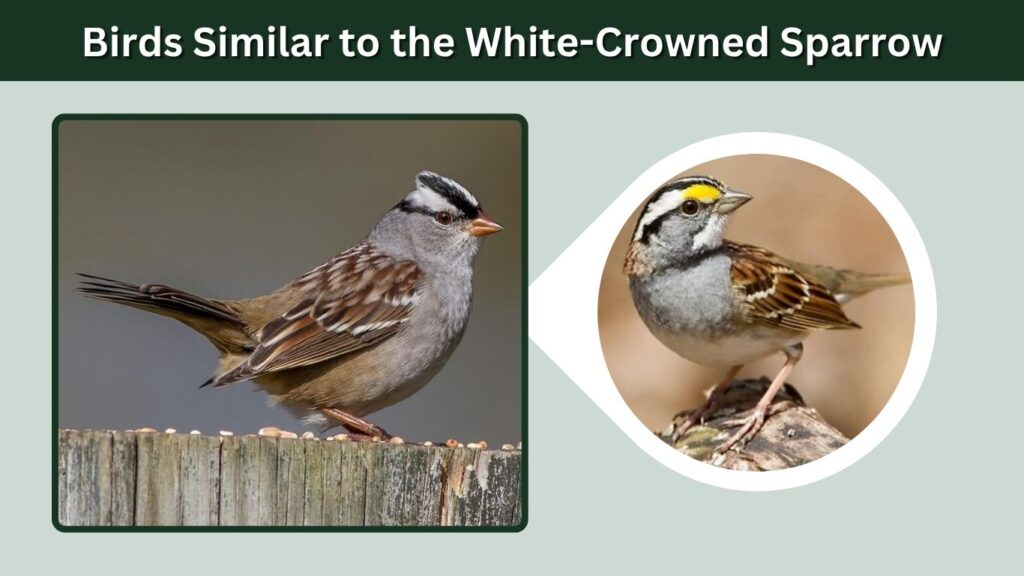
Several sparrows have striped heads or similar brown-and-gray plumage. Head color, breast pattern, bill color, and facial markings provide the most useful distinctions.
White-Crowned vs. White-Throated Sparrow
The White-throated Sparrow has a clear white throat patch and usually shows yellow spots between the eyes and bill. The White-crowned Sparrow lacks both the bright white throat patch and yellow lores. It also tends to have a cleaner gray breast and a more extensive striped crown.
Other Possible Look-Alikes
A Golden-crowned Sparrow has a yellow crown patch bordered by darker feathers rather than a clean white central stripe. Chipping Sparrows are smaller and have rusty caps during the breeding season. Song Sparrows have heavily streaked breasts, usually with a darker central spot, instead of smooth gray underparts.
How to Attract White-Crowned Sparrows
Offer sunflower seeds, millet, cracked corn, or other small seeds in a ground feeder or low platform. Scattering a modest amount beneath a feeder can also attract them.
Maintain brush piles, native grasses, shrubs, and sheltered ground-level spaces where the birds can forage and retreat from danger. Avoid clearing every fallen leaf, because leaf litter can contain seeds and small invertebrates.
FAQs
Are White-crowned Sparrows rare?
White-crowned Sparrows are widespread and common across much of western North America. However, their local abundance varies. In eastern regions, they may be uncommon winter visitors or appear primarily during spring and fall migration rather than remaining throughout the season.
What does a female White-crowned Sparrow look like?
A female looks much like a male, with a gray breast, brown wings, long tail, pale bill, and bold crown stripes. The sexes generally cannot be separated reliably by appearance, although males are more likely to sing loudly and defend territories during breeding season.
How long do White-crowned Sparrows live?
Many wild sparrows have relatively short lives because they face predators, severe weather, migration hazards, and food shortages. However, the oldest recorded White-crowned Sparrow was at least 13 years and 4 months old when it was encountered in California.
Where do White-crowned Sparrows nest?
Northern populations normally nest on the ground beneath moss, grass, or low shrubs. Along the Pacific Coast, nests are often positioned several feet above the ground inside dense vegetation. Females choose the location and build the cup-shaped nest.
What is special about the White-crowned Sparrow’s song?
Its song is famous for its regional dialects. Young males learn songs by listening to nearby adults, and populations in different locations develop recognizable variations. Most versions begin with a clear whistle and end with mixed whistles, buzzing notes, or a trill.