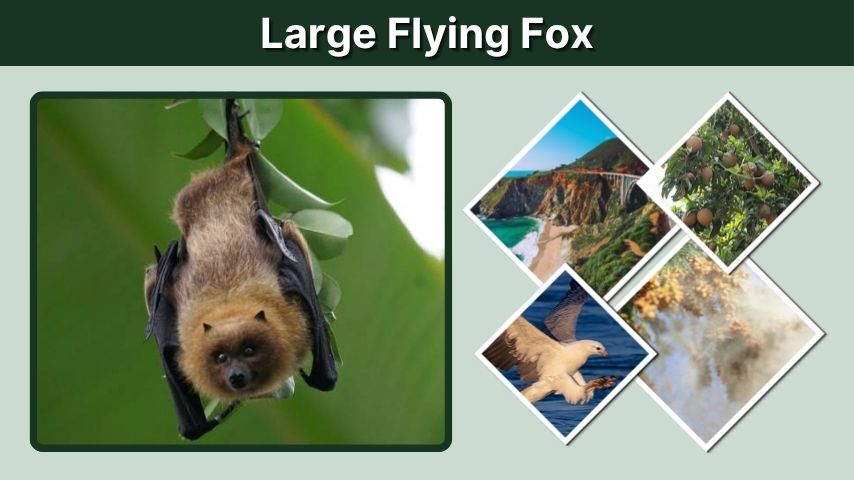
The large flying fox is one of the most impressive bats in the world. With its fox-like face, huge wingspan, and fruit-based diet, this tropical megabat often surprises people who imagine bats as small, cave-dwelling animals. Also called the large flying fox bat, it plays an important role in forest ecosystems by helping pollinate plants and disperse seeds across Southeast Asia.
What Is the Large Flying Fox?
The large flying fox is a species of fruit bat known for its impressive size and strong, graceful flight. Unlike many smaller bats, it does not look mouse-like. Its face resembles a small fox, which explains the common name “flying fox.”
The scientific name of the large flying fox is Pteropus vampyrus. Despite the word “vampyrus,” this bat does not drink blood. It is a vegetarian species that feeds mainly on fruit, nectar, and flowers.
Large Flying Fox Scientific Name
The large flying fox belongs to the genus Pteropus, a group of Old World fruit bats often called flying foxes. These bats are part of the family Pteropodidae, commonly known as megabats or fruit bats.
Its scientific name can be confusing because “vampyrus” sounds like “vampire.” However, the large flying fox is not a vampire bat. Vampire bats are a different group found in the Americas, while the large flying fox lives in Southeast Asia and eats plant-based foods.
Large Flying Fox vs Other Bats
The large flying fox is different from many small insect-eating bats in several ways:
- It mainly eats fruit, nectar, and flowers.
- It has large eyes and relies heavily on vision.
- It does not use echolocation like many smaller bats.
- It roosts in trees instead of deep caves.
- It can travel long distances while searching for food.
These features make the large flying fox an important species in tropical forests, especially where flowering and fruiting trees depend on animals for pollination and seed movement.
Large Flying Fox Size and Wingspan
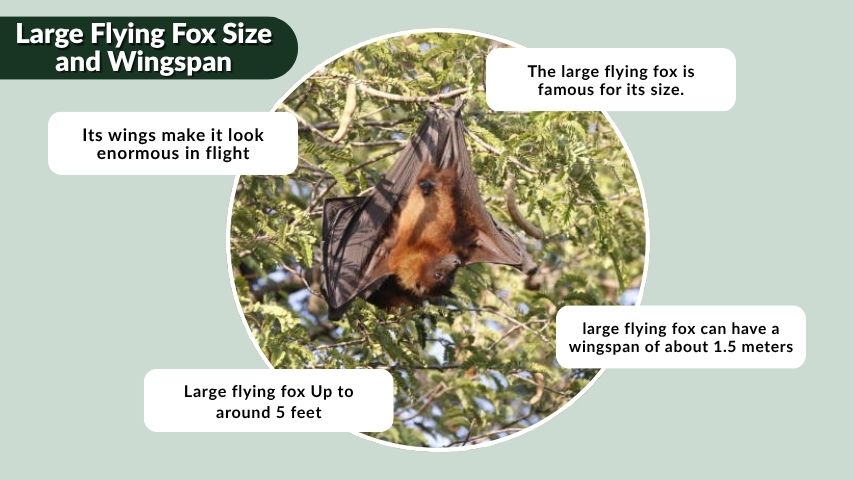
The large flying fox is famous for its size. It is often listed among the largest bats in the world, especially when measured by wingspan. While its body is not as heavy as many people imagine, its wings make it look enormous in flight.
A large flying fox can have a wingspan of about 1.5 meters, and some sources describe individuals approaching even larger spans. When its wings are fully stretched, it can look as wide as a small human is tall.
Large Flying Fox Size Comparison
Compared with common small bats, the large flying fox is massive. Many backyard bats have wingspans of only a few inches, while the large flying fox may stretch across several feet.
Here is a simple size comparison:
| Animal | Approximate Wingspan or Size | Comparison |
| Common small bat | 8–12 inches | Much smaller |
| Large flying fox | Up to around 5 feet | One of the largest bats |
| Bald eagle | Around 6–7 feet | Larger wingspan |
| Adult human height | Around 5–6 feet | Similar visual scale |
This comparison helps explain why searches such as “large flying fox next to human” and “large flying fox size comparison eagle” are popular. The bat looks dramatic in photos because its wings are long, thin, and leathery.
Large Flying Fox Weight and Length
Although it has a huge wingspan, the large flying fox is not extremely heavy. Like other bats, it needs a lightweight body for flight. Its bones, muscles, and wing membranes are adapted to help it glide and flap efficiently through forests and open air.
Its body is covered with dark brown to blackish fur, often with a warmer orange-brown or golden tone around the head, neck, or shoulders. This gives it a striking appearance when hanging upside down in trees.
Large Flying Fox Habitat
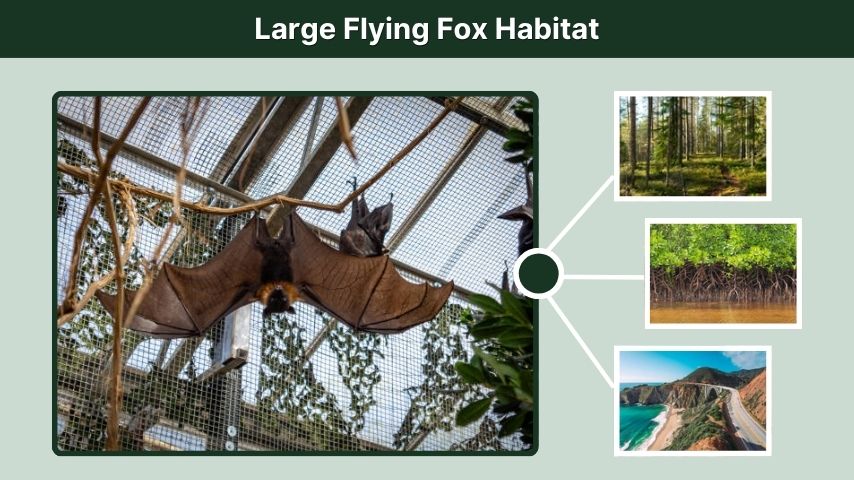
The large flying fox is native to Southeast Asia. It is associated with tropical and subtropical regions where fruiting and flowering trees are available. Its habitat includes forests, mangroves, coastal areas, swamps, and sometimes agricultural landscapes near suitable roosting sites.
This bat often roosts in tall trees, especially in places that offer safety from disturbance. Large groups may gather in colonies, hanging upside down during the day before flying out at dusk to feed.
Where Is the Large Flying Fox Indigenous To?
The large flying fox is indigenous to parts of Southeast Asia, including regions such as Indonesia, Malaysia, the Philippines, Thailand, Myanmar, Cambodia, Vietnam, and nearby islands. It is not indigenous to Africa, even though some keyword searches ask whether the large flying fox is native there.
Its range can vary by island and local habitat conditions. In many places, populations have declined because of forest loss, hunting, and disturbance at roosting sites.
Large Flying Fox in Tropical Rainforests
Tropical rainforests are especially important to the large flying fox. These forests provide fruit, nectar, flowers, and safe roosting trees. Because flying foxes can travel long distances, they help connect forest patches by carrying seeds from one place to another.
They may also visit orchards or cultivated areas when natural food is limited. This sometimes causes conflict with farmers, but the species still provides ecological benefits that support forest regeneration.
Large Flying Fox Diet
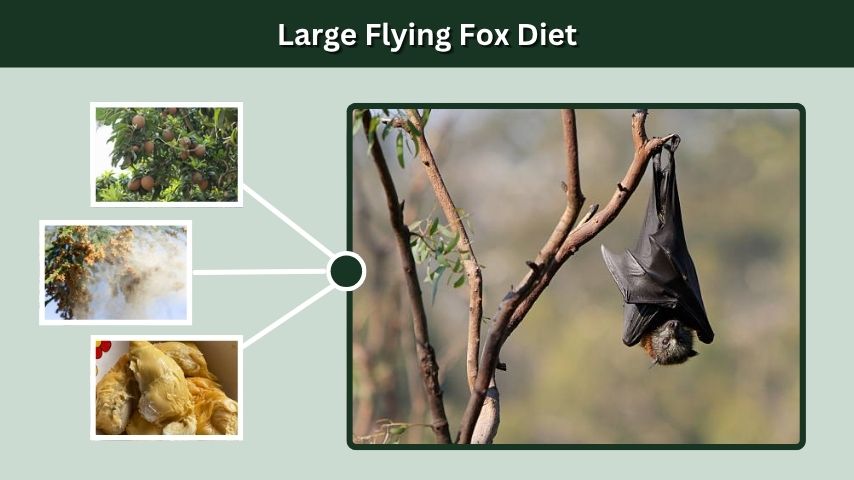
The large flying fox diet is plant-based. It feeds mostly on fruit, nectar, and flowers. It may eat fruits such as figs, mangoes, bananas, rambutan, and other tropical fruits when available.
Unlike predatory bats, it does not hunt insects, fish, birds, or mammals. It is a fruit bat, not a meat-eating bat.
What Do Large Flying Foxes Eat?
Large flying foxes commonly eat:
- Ripe tropical fruits
- Flower nectar
- Pollen
- Soft fruit pulp
- Blossoms from forest and cultivated trees
When eating fruit, they may crush the pulp, swallow the juice, and spit out fibrous material. This feeding style helps spread seeds and plant material across the landscape.
Feeding Habits and Night Activity
The large flying fox is nocturnal. It usually rests during the day and becomes active around evening. At dusk, colonies leave their roosts and fly to feeding areas. Some individuals can travel long distances in a single night to reach fruiting trees.
Because it depends strongly on eyesight and smell, the large flying fox is well adapted to finding fruit and flowers in the dark. Its large eyes help it navigate at night, while its strong wings allow it to cover wide areas.
Large Flying Fox Adaptations
The large flying fox has several adaptations that help it survive in tropical environments. Its wings are made of stretched skin supported by elongated finger bones, allowing controlled flight and maneuverability.
Its claws help it grip branches while roosting upside down. Its sharp senses help it locate food, avoid danger, and return to colony sites.
Important adaptations include:
- Large wings for long-distance flight
- Strong eyesight for nighttime navigation
- A fox-like snout for detecting fruit and flowers
- Claws for hanging from branches
- Lightweight bones for efficient flying
- Social roosting behavior for safety
These traits allow the large flying fox to live successfully in forested and coastal habitats, although human pressures have made survival more difficult.
Large Flying Fox Lifespan and Reproduction
The lifespan of a large flying fox can vary depending on whether it lives in the wild or in managed care. In the wild, threats such as hunting, habitat loss, storms, and food shortages can reduce survival. In protected environments, flying foxes may live longer.
Like many large bats, the large flying fox has a slow reproductive rate. Females usually give birth to one pup at a time. This makes population recovery slow when numbers decline.
Baby Large Flying Foxes
A baby large flying fox is called a pup. The mother carries and nurses the pup until it grows strong enough to hang, climb, and eventually fly. Young flying foxes depend heavily on their mothers during early life.
Because females do not produce many offspring quickly, protecting adult bats is essential. Losing breeding adults can have a serious effect on colony numbers.
Social Colonies
Large flying foxes often live in colonies. These colonies may include dozens, hundreds, or even thousands of bats, depending on the location and level of protection. Roosting together may help them stay alert to danger and find feeding areas.
Colonies can be noisy, active, and easy to notice, especially at sunset when bats begin leaving the trees.
Large Flying Fox Predators and Threats
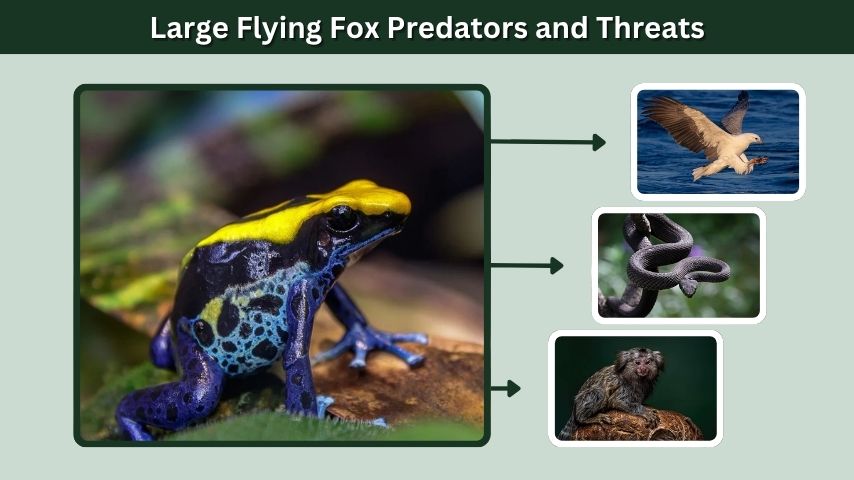
Natural predators may include large birds of prey, snakes, and some mammals that can reach roosting bats or young pups. However, the biggest threats to large flying foxes usually come from humans.
Major threats include habitat destruction, hunting, disturbance, and conflict with fruit growers. In some regions, flying foxes are hunted for food or persecuted because they are seen as crop pests.
Why Large Flying Foxes Are Threatened
Large flying foxes are threatened largely because their habitats are disappearing or becoming fragmented. When forests are cleared for agriculture, logging, roads, or development, the bats lose both feeding sites and safe roosting trees.
Other pressures include:
- Hunting for bushmeat
- Disturbance at roosting colonies
- Persecution near orchards
- Loss of mangroves and lowland forests
- Slow reproduction rates
Because they reproduce slowly, large flying fox populations cannot quickly replace individuals lost to hunting or habitat destruction.
Are Large Flying Foxes Dangerous?
Large flying foxes are not aggressive animals. They do not attack humans, and they do not drink blood. Most prefer to avoid people and spend their time feeding, flying, grooming, and roosting.
However, like all wild animals, they should not be handled. Bats can carry diseases, and touching an injured or stressed bat can be dangerous for both the person and the animal. If someone finds an injured flying fox, the safest action is to contact local wildlife rescuers.
Can a Large Flying Fox Be a Pet?
A large flying fox should not be kept as a pet. It is a wild animal with complex needs, including space for flight, social interaction, specialized food, and proper veterinary care. In many places, keeping flying foxes is illegal or highly regulated.
They belong in natural habitats, sanctuaries, or professional conservation settings, not in private homes.
Fun Facts About Large Flying Foxes
The large flying fox is full of surprising traits. Its dramatic appearance often makes people think it is scary, but it is actually a fruit-eating pollinator with an important ecological role.
Here are some interesting facts:
- The large flying fox is one of the largest bats in the world.
- Its scientific name is Pteropus vampyrus.
- It eats fruit, nectar, and flowers, not blood.
- It has a fox-like face and large eyes.
- It usually roosts in trees during the day.
- It is nocturnal and feeds mainly at night.
- It helps forests by spreading seeds and pollen.
- It can fly long distances to find food.
- It is native to Southeast Asia.
- It is considered endangered in the wild.
These facts make the large flying fox one of the most fascinating megabats on Earth.
FAQs
Is the large flying fox nocturnal?
Yes, the large flying fox is nocturnal. It usually rests in trees during the day and becomes active around dusk. At night, it flies to feeding areas to search for fruit, nectar, and flowers. Its large eyes help it navigate and locate food in low light.
What is the large flying fox scientific name?
The scientific name of the large flying fox is Pteropus vampyrus. Despite the name, it is not a vampire bat and does not drink blood. It is a fruit bat that feeds on plant-based foods such as fruit, nectar, pollen, and blossoms.
How big are large flying foxes?
Large flying foxes are among the biggest bats in the world. Their wingspan can reach around five feet, making them look huge in flight. Their bodies are much lighter than their wingspan suggests because they need to stay lightweight enough for efficient flying.
Where do large flying foxes live?
Large flying foxes live in Southeast Asia. They are found in tropical and coastal habitats, including forests, mangroves, swamps, and areas near fruiting trees. They often roost in tall trees and may form large colonies where safe roosting sites are available.
What do large flying foxes eat?
Large flying foxes eat fruit, nectar, flowers, pollen, and soft fruit pulp. They may feed on figs, mangoes, bananas, rambutan, and other tropical fruits. Their feeding behavior helps spread seeds and pollinate plants, making them important for healthy forest ecosystems.